
How a Global MBA Builds Cross-Cultural Career Skills
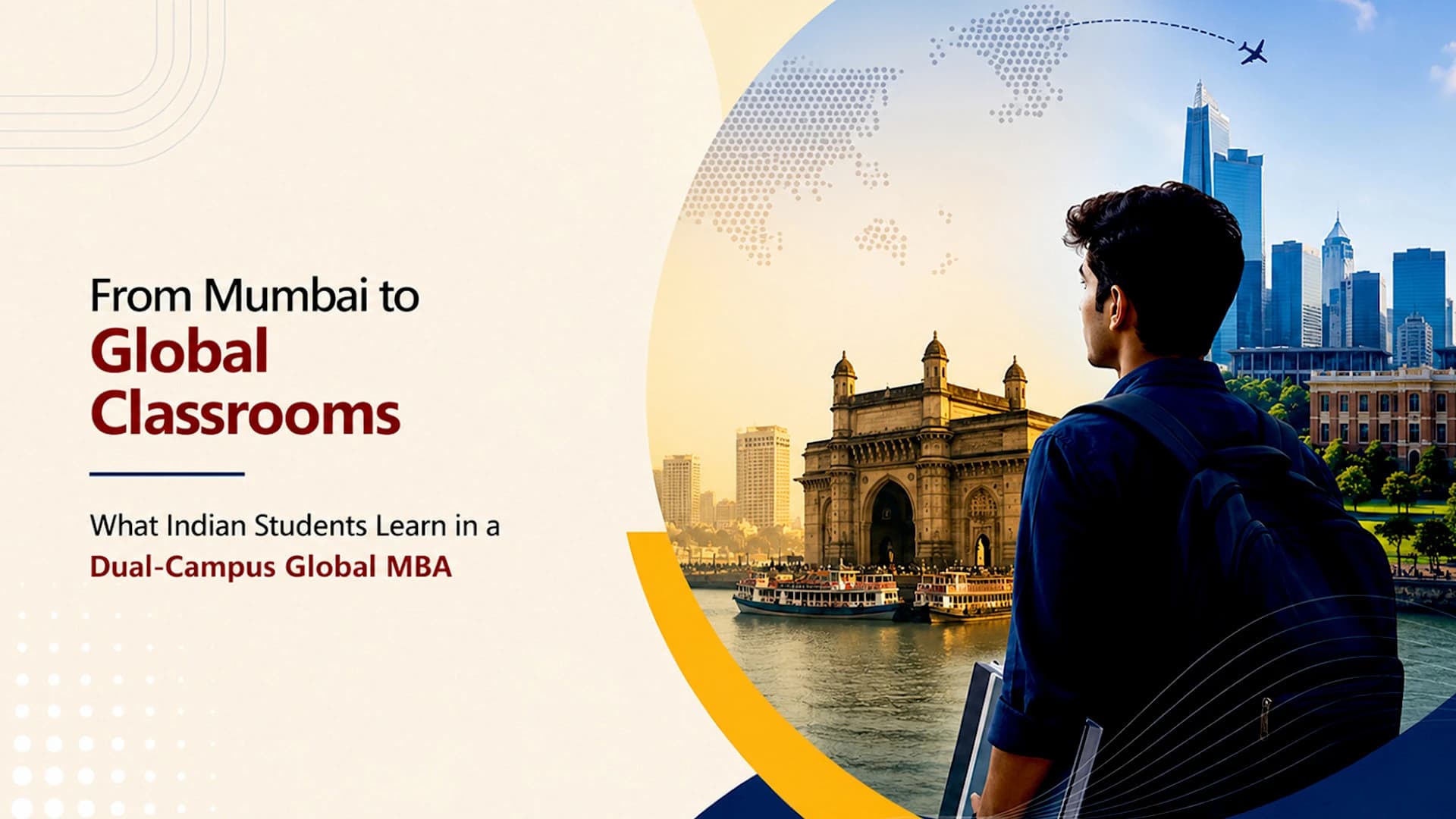
- 30th October, 2026
- |
- Author: N. L. Dalmia
Key Takeaways
-
A dual-campus Global MBA in India gives you academic experience in India and overseas.
-
You build cross-cultural communication and global decision-making skills.
-
International classroom exposure helps you understand diverse markets and business practices.
-
A dual-campus model often reduces the adjustment pressure linked with studying abroad from day one.
-
You develop a stronger professional network across countries and industries.
Why a Global MBA in India Appeals to Modern Students
Business careers no longer remain limited to one city or one country. Companies work across regions and serve customers from different cultures. Employers also expect management graduates to understand international markets and global business practices.
A Global MBA in India gives you a structured path towards this exposure. You begin your management education in India and complete part of your studies at an international university. This model gives you time to build your academic base before entering a new country and education system.
The dual-campus structure also suits students who want international education but prefer a gradual transition. You first understand core management concepts in a familiar environment. You then apply that knowledge in a global classroom.
N. L. Dalmia Institute of Management Studies and Research offers a Global MBA through a 1+1 structure. Students complete the first year at the institute and the second year at a partner university. The institute has international linkages with universities in the USA, Canada, the UK and South Korea.
What You Learn in a Dual-Campus MBA Program
A dual-campus MBA program gives you more than two academic locations. It gives you two different learning environments.
Your first year usually focuses on core business areas. You study subjects linked to finance, marketing, operations, strategy and leadership. You also develop presentation skills and analytical thinking.
Your second year introduces you to a different academic culture. Teaching methods often place greater emphasis on discussion, case analysis and independent thinking. Group work also becomes more diverse because classmates bring different cultural and professional experiences.
This structure helps you learn how business decisions change across markets. A marketing strategy that works in Mumbai might need a different approach in another country. Consumer behaviour, regulations and workplace practices also vary.
A Global MBA in India helps you understand these differences through direct academic exposure.
You Develop Cross-Cultural Communication Skills
Clear communication plays a major role in global business. Different cultures express ideas in different ways. Some cultures prefer direct communication and others value a more formal approach.
An international MBA program places you in situations where you interact with students and faculty from different backgrounds. You learn how to present your ideas with clarity. You also learn how to listen and respond with respect.
Group assignments teach you how to manage different opinions. Classroom discussions improve your confidence. International exposure also helps you understand how cultural values influence teamwork and leadership.
These skills support careers in consulting, finance, marketing, analytics and international business.
You Understand Global Business Practices
A traditional MBA often focuses on domestic business conditions. A Global MBA in India expands your view.
You study how companies enter new markets. You also explore global supply chains, international finance and cross-border strategy. Discussions may cover economic changes and regional business risks.
Your learning becomes more practical when you study in two countries. You see how policies and consumer expectations affect business decisions. You also understand why companies change their products and communication across regions.
This global business education helps you become more flexible in your thinking. It also prepares you for roles that involve international teams and multinational clients.
You Build a Wider Professional Network
Your network often shapes your career journey. A study abroad MBA gives you access to classmates, professors and professionals from different countries.
A dual-campus structure expands this network further. You build relationships in India during your first year. You then form new connections at the international campus.
These relationships often lead to new ideas and professional opportunities. You also gain access to alumni communities across locations. A strong international network gives you valuable perspectives during your career.
N. L. Dalmia Institute supports global exposure through its international linkages. This approach adds an international dimension to management learning without separating students from their Indian academic foundation.
Read more - Leveraging Your Global MBA Program for Professional Growth
You Gain Confidence and Independence
Living and studying abroad changes the way you handle responsibility. You manage academic work and daily life in a new environment. You also adapt to different classroom expectations.
This experience builds independence. It also improves your ability to solve problems under pressure.
A Global MBA in India gives you time to prepare for this transition. Your first year helps you strengthen your business knowledge and professional habits. Your second year then tests these skills in a global setting.
The result is not only academic growth. You also develop maturity and confidence.
How a Global MBA Differs from a Traditional MBA or PGDM
A traditional MBA or PGDM offers strong management education. A dual-campus Global MBA adds an international learning component.
The biggest difference lies in the learning environment. You study across two academic systems and experience different business cultures. You also gain direct exposure to international peers and faculty.
A Global MBA in India suits students who want a career linked to global markets. It also suits students who value international education but want a structured start in India.
N. L. Dalmia Institute has a long-standing management education legacy and was established in 1995. Its Global MBA reflects the institute’s focus on international linkages and industry-relevant learning.
What You Should Check Before Choosing a Global MBA Program
You should review the structure of the program before applying. The overseas component should have clear academic value.
You should also check:
-
The partner university and its location
-
The subjects offered during each year
-
The admission and evaluation process
-
The total cost of tuition and living expenses
-
The support offered before the international transition
You should also study the career relevance of the curriculum. A strong global MBA program should connect classroom learning with modern business challenges.
The Global MBA at N. L. Dalmia Institute evaluates applicants through a personal interview, an aptitude test and their academic track record. The institute accepts several recognised management entrance examinations for admission.
Is a Dual-Campus Global MBA Right for You?
A Global MBA in India suits you if you want international exposure and a strong management foundation.
The program also suits you if you enjoy learning from diverse people. Curiosity and adaptability matter because you will experience different teaching styles and cultural expectations.
Parents often look at safety, academic quality and career value. Students usually focus on international exposure and professional growth. A dual-campus model addresses both concerns through a planned transition.
Your goal should guide your decision. A global career requires more than an international degree. It requires communication skills, cultural awareness and sound business judgement.
Start Your Global Management Journey at N. L. Dalmia Institute
A dual-campus MBA gives you the chance to move from a familiar Indian classroom to an international learning environment. You gain knowledge and you also develop a broader view of business.
N. L. Dalmia Institute’s Global MBA combines management education in Mumbai with global exposure through international university linkages. The program helps you build cross-cultural understanding and practical business skills.
Explore the Global MBA in India at N. L. Dalmia Institute of Management Studies and Research and take your first step towards a global management career.
Frequently Asked Questions
1. What is a dual-campus Global MBA?
A dual-campus Global MBA lets you study at two academic locations. You complete part of the program in India and another part at an international partner university.
2. Is a Global MBA different from a traditional MBA?
A Global MBA includes international academic exposure and cross-cultural learning. A traditional MBA often focuses mainly on one country or education system.
3. Who should pursue a Global MBA in India?
Final-year students and young professionals often choose this path. It suits you if you want international business exposure and a structured overseas learning experience.
4. What skills do you gain from an international MBA program?
You gain cross-cultural communication and global business understanding. You also improve your confidence, adaptability and decision-making skills.
5. Does N. L. Dalmia Institute offer international study opportunities in its Global MBA?
Yes. The Global MBA follows a 1+1 model and includes study at an international partner university after the first year at N. L. Dalmia Institute.
Related Blogs
Studying in Multiple Countries Through a Global MBA and Its Career Advantage
- 28th October, 2026
- Global MBA
Study Global MBA Abroad for International Career Growth
Learn More
How Global MBA Programs Prepare Students for International Business Challenges
- 23rd October, 2026
- Global MBA
How Global MBA Programs Build International Business Skills
Learn More
Future Careers After Global MBA: Emerging Job Roles in 2030
- 20th October, 2026
- Global MBA
Global MBA Careers in 2030: Emerging Future Job Roles
Learn More