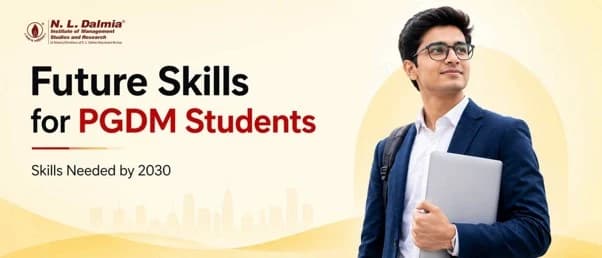
Future Skills for PGDM Students: Skills Needed by 2030
- 2nd September, 2026
- |
- Author: N. L. Dalmia
Future Skills for PGDM Students: Skills Needed by 2030
Key Takeaways
-
AI, data and digital literacy will shape future management careers. PGDM students need to understand tools, dashboards and AI-driven decision-making.
-
Human skills will stay equally important. Communication, leadership, collaboration and critical thinking will help students stand out.
-
Adaptability will be a core career skill by 2030. Students need to keep learning as roles, industries and technologies change.
-
Ethical and ESG-aware decision-making will matter more. Future managers need to balance business growth with responsibility.
The workplace you enter after your PGDM program will look very different from the workplace your seniors entered. AI, automation, data, sustainability and global business shifts are already changing job roles.
This is why future skills for PGDM students matter more than ever. You are not just preparing for your first job. You are preparing for a career that will keep changing.
LinkedIn also reports that 70% of the skills used in most jobs are expected to change by 2030. This means you need a learning mindset from day one. You need business knowledge, but you also need digital confidence, people skills and strong judgement.
Future of Work Trends That Will Shape Your Career
The future of work is not only about robots replacing people. It is about people using technology better. Companies will look for managers who understand data, AI tools, customer behaviour, finance, people and markets.
Some major future of work trends are already visible:
-
AI tools are becoming part of daily work.
-
Data is guiding business decisions.
-
ESG and sustainability are influencing finance and strategy.
-
Hybrid teams are becoming more common.
-
Human skills like leadership and collaboration are gaining value.
The World Economic Forum lists AI, big data, networks, cybersecurity and technological literacy among the fastest growing skills. It also highlights creative thinking, resilience, flexibility, leadership and analytical thinking.
This mix is important. You need technology skills, and you need human skills. This balance will define the skills needed by 2030.
Why Future Skills for PGDM Students Matter Now
A PGDM program gives you a strong base in management. It helps you understand marketing, finance, analytics, operations, HR and strategy. Yet the future of work needs more than classroom knowledge.
You will enter organisations that expect quick thinking. You will work with teams that use AI dashboards. You will handle customers who expect speed and personalisation. You will also face pressure to make ethical decisions.
That is why future skills for PGDM students should become part of your daily learning. You need to build these skills while you study, not after graduation.
N. L. Dalmia Institute offers PGDM specialisations in Finance, Marketing, Human Resources and Business Analytics. Its PGDM programs also have equivalence to MBA by the Association of Indian Universities. This gives you a recognised management pathway and a practical base for career growth.
1. Digital Literacy and AI Awareness
Digital literacy is no longer optional. You need to understand tools, platforms and digital workflows. You do not need to become a software engineer, but you need to understand how technology supports business.
AI awareness is also one of the most important future skills for PGDM students. You need to know how AI tools work, where they help and where human judgement matters.
You should learn:
-
Basic AI concepts
-
Prompt writing
-
Data interpretation
-
Digital collaboration tools
-
Responsible use of AI
AI will support research, reporting, forecasting and customer insights. Your role will be to ask better questions and make better decisions.
Read more - Digital Transformation: Preparing for a Competitive Business World
2. Data Thinking and Business Analytics
Data will shape almost every business function by 2030. Marketing teams use data to understand customers. Finance teams use data to manage risk. HR teams use data to improve hiring and retention.
Data thinking is one of the key career skills for management students. It means you understand numbers, patterns and business meaning. You do not just read a dashboard. You ask what the dashboard is telling you.
PGDM students should focus on analytics, visualisation and business interpretation. N. L. Dalmia Institute’s Business Analytics focus supports this need through practical learning and analytical thinking.
3. Financial and ESG Awareness
Finance is becoming more connected with technology and sustainability. Companies are paying attention to ESG, risk, compliance and responsible investment. This shift creates a need for managers who understand both financial performance and long-term impact.
This is one of the skills needed by 2030 because business leaders will need to balance profit, people and planet. You should understand financial statements, market behaviour, ESG basics and investment logic.
N. L. Dalmia Institute’s Financial Research Analyst Certification gives exposure to Economics, Equities, Currencies, Fixed Income and Technical Analysis. The institute also has South Asia’s largest Bloomberg Lab with 24 terminals. This gives students hands-on exposure to real-time financial data.
4. Critical Thinking and Problem Solving
AI will give you answers. Your value will come from asking the right questions. Critical thinking helps you test facts, compare options and choose practical solutions.
This is one of the strongest future skills for PGDM students because business problems are rarely simple. A marketing issue might have a pricing angle. A finance issue might have a customer behaviour angle. A people issue might have a cultural angle.
You should learn to break problems into parts. You should also learn to defend your ideas with logic and evidence.
5. Communication and Storytelling
Good managers do not only analyse. They also explain. You need to present ideas clearly to teams, clients and leaders.
Communication is one of the top career skills for management students because every business role needs it. You will write emails, present reports, pitch ideas and lead meetings. Your communication should be clear, structured and confident.
Storytelling also matters. Data becomes useful when you explain its meaning. Strategy becomes powerful when your team understands it.
6. Leadership and Collaboration
The future workplace will have diverse teams. Some people will work from offices. Some people will work from different cities. Some people will use different digital tools.
Leadership will not only mean authority. It will mean influence, trust and clarity. You need empathy, listening skills and accountability.
These are essential skills needed by 2030 because organisations will need managers who bring people together. You should learn how to manage conflicts, give feedback and support team goals.
7. Adaptability and Lifelong Learning
Your first job title will not define your full career. New industries will grow. New roles will appear. Old tasks will change.
Adaptability is one of the most practical future skills for PGDM students. You need to stay open to new tools, new ideas and new ways of working.
Lifelong learning will help you stay relevant. You should read industry reports, attend workshops, build certifications and learn from mentors. This habit will support your growth long after your PGDM program ends.
8. Ethical Decision-Making
Technology brings speed, but ethics brings direction. Managers will face questions around data privacy, AI bias, sustainability, employee wellbeing and fair business practices.
Ethical decision-making is one of the most important career skills for management students. You need to know what is right, not only what is profitable.
Companies will value professionals who protect trust. Your decisions should reflect responsibility and business sense.
How PGDM Students Should Prepare from Today
The best way to build future skills for PGDM students is through daily practice. You should not wait for placements to begin.
Start small and stay consistent.
-
Read one business article every day.
-
Learn one digital tool each month.
-
Take part in live projects and case studies.
-
Improve your presentation skills.
-
Build your LinkedIn profile with meaningful work.
-
Learn basic analytics and AI concepts.
-
Seek feedback from faculty and industry mentors.
Your PGDM journey should help you build confidence, not just credentials.
Build Your Future with N. L. Dalmia Institute
The future of work will reward students who combine knowledge, technology and human skills. You need to understand business, but you also need to adapt fast. You need digital fluency, but you also need judgement and empathy.
N. L. Dalmia Institute of Management Studies and Research supports this journey through industry-oriented PGDM learning, MBA-equivalent PGDM programs, analytics exposure and finance-focused resources like the Bloomberg Lab. Its focus on management education and industry relevance helps you prepare for the changing workplace.
Take the next step towards a future-ready management career. Explore the PGDM program at N. L. Dalmia Institute and build the future skills for PGDM students that will matter by 2030.
Related Blogs
A guide to help you get Admission to a PGDM Program
- 11th May, 2023
- PGDM
A Post Graduate Diploma in Management (PGDM) program in India is the perfect choice to boost your career in the business world. If you’re planning to pursue a PGDM program soon, there are numerous B-…
Learn More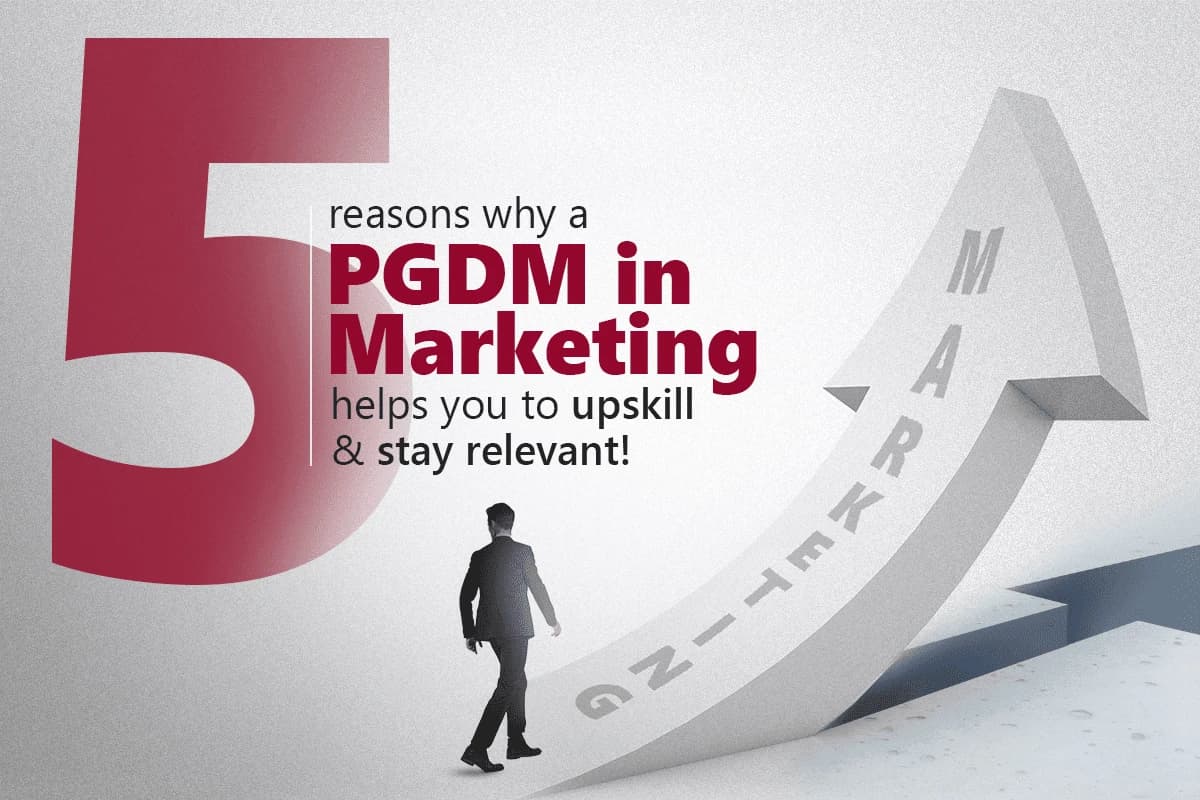
How PGDM in Marketing helps you to Upskill and Stay Relevant
- 23rd January, 2023
- PGDM
PGDM or Post Graduate Diploma in Management is a two-year course. Specialisation in Marketing means that the student learns about the theories and concepts in sales, marketing, customer engagement, d…
Learn MoreWhy you Should take up a PGDM in Human Resources
- 9th May, 2022
- PGDM
Whether you are a fresher or an experienced professional, a PGDM in HR can give your career the push it deserves. In the last decade, Human Resource Management has evolved into a fast-growing profess…
Learn More