

Blogs
Recent Posts
Categories
Archives
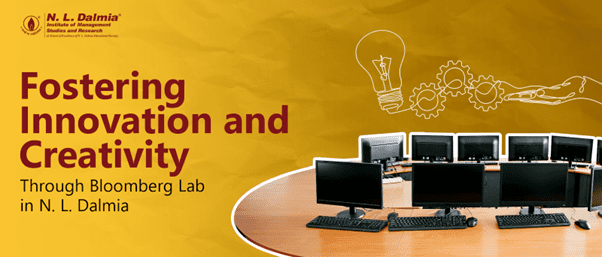
Fostering Innovation and Creativity Through Bloomberg Lab in N. L. Dalmia
- July 9, 2025
- | MBA, MBA Advice
- | No Comments
Many students who step into the world of finance education often find themselves asking the same question: How do I get beyond the theory? You read about market trends, financial tools and complex analysis in books but the real world operates differently. It demands fast thinking, smart decisions and creative solutions. If you do not get the right exposure early on, your learning may stop at surface-level understanding.
This is where the gap lies.
Finance and investment careers today are more competitive than ever. Recruiters no longer look for just degrees. They look for skill, practical exposure and the ability to work with real-time data. As a student, you want a program that helps you build these strengths. You want to be innovative, analytical and capable of driving change. But not every institution helps you grow beyond the classroom.
This is where N. L. Dalmia Institute of Management Studies and Research (NLDIMSR) sets itself apart.
The Power of Bloomberg Lab
The institute is home to South Asia’s largest Bloomberg Lab and this isn’t just a badge of honour. It is a gateway to real-time learning. With 24 Bloomberg terminals, the advanced lab offers a world-class platform where you can see how global markets move, respond and evolve. This is the space where you do not just study data—you interpret it, test it and use it to form powerful insights.
The Bloomberg Lab gives you hands-on experience in equities, currencies, economics, fixed income and technical analysis. The access you gain is the same as what top global analysts and investment professionals use daily. It turns you into a thinker who is not only aware of the market but also capable of shaping its direction.
At N. L. Dalmia Institute, creativity through Bloomberg Lab becomes your daily practice. You learn to build strategies from scratch and explore patterns hidden in complex data. You use real-time tools to make smart assumptions and prepare reports that mirror professional quality.
Driving Innovation Through Bloomberg Lab
What makes this lab a true engine of growth is its role in fostering creativity. In a world full of data, creativity is what sets you apart. The lab encourages you to go beyond charts and numbers. It inspires you to ask questions like: Why did this market crash? What might happen next? How can we reduce risks or improve portfolio performance?
This questioning mindset leads to innovation through Bloomberg Lab. Students are trained to think like analysts and act like strategists. You learn to apply theoretical models to live cases. You work on projects that mirror real-world financial challenges. This type of experiential learning is what builds long-term confidence.
Whether you’re preparing for a career in investment banking, financial consulting or asset management, the Bloomberg Lab helps you find your own style of problem-solving. You learn that bloomberg innovation is not just about using a terminal—it is about learning how to think differently.
Real-World Mentorship and Practical Learning
One of the biggest strengths of this course is the mentorship by industry practitioners. At N. L. Dalmia Institute, your guides are not just professors. They are people who have worked in the financial sector, led organisations and made critical investment decisions. This brings depth to your learning.
They do not just teach you what a financial ratio is—they explain how they used it in a merger deal. They do not just show you a trend—they explain what it meant for a company’s future. You gain access to years of knowledge through one-on-one guidance and project reviews.
This direct mentorship ensures that your classroom experience stays aligned with industry expectations. It makes you ready for job interviews, client meetings and analytical roles that demand more than academic knowledge.
Bloomberg Certification with an ESG Edge
Another unique advantage is the opportunity to earn the Prestigious ESG Certification through South Asia’s Largest Bloomberg Lab. As companies shift towards sustainability and socially responsible investing, knowledge of Environmental, Social and Governance (ESG) standards is becoming a must-have.
At NLDIMSR, you do not just learn ESG concepts. You earn a certification that reflects your competence in analysing ESG-focused investments. This adds a global layer to your profile and positions you as a future-ready finance professional.
This ESG certification is highly valued across industries, especially in investment banking, risk management, equity research and consulting. It tells employers that you understand not only numbers but also the social impact behind them.
Course Outcomes That Build Careers
Here’s what you gain from this Bloomberg-backed experience:
- Ability to use Bloomberg Terminal with ease
- Mastery in handling real-time data and financial modelling
- Exposure to live market movements and decision-making techniques
- Bloomberg ESG Certification for added global value
- Reports, charts and presentations that reflect professional standards
- Critical thinking and problem-solving skills grounded in practical learning
- One-on-one mentorship to help you stay on the right path
By the end of your course, you’re not just a student. You are a finance professional in the making.
What Makes N. L. Dalmia Institute Stand Out
Apart from the Bloomberg Lab, NLDIMSR has built a strong foundation for learning and development:
- It is a National and International Accredited Institution, holding accreditations from NBA, AIU and SAQS
- It offers PGDM programs equivalent to an MBA, ensuring your degree is valued worldwide
- The institute has built strong international linkages with universities in the USA, UK, South Korea and Canada
- Its highly qualified doctorate faculty comes from IITs, IIMs and leading global institutions
- It offers up to 100% scholarships to meritorious students, promoting talent regardless of background
These differentiators make the learning journey more holistic. They provide the structure, support and recognition you need to excel.
Final Thoughts: Your Journey Starts Here
The world of finance is dynamic. It demands professionals who think smart and act fast. If you are someone who wants to go beyond traditional learning and become a leader in financial research, the Bloomberg Lab course at N. L. Dalmia Institute is your best step forward.
You will learn by doing. You will think critically and creatively. You will earn credentials that matter and get mentored by those who’ve walked the path before you.
If you’re looking for a financial research analyst course or a Bloomberg Lab course that gives you more than a certificate, this is your moment. Choose a program that prepares you for a lifetime of opportunities.
Apply now to the Bloomberg Lab Course at N. L. Dalmia Institute of Management Studies and Research. Learn from the best, think like a strategist and lead the future of finance with innovation and creativity.

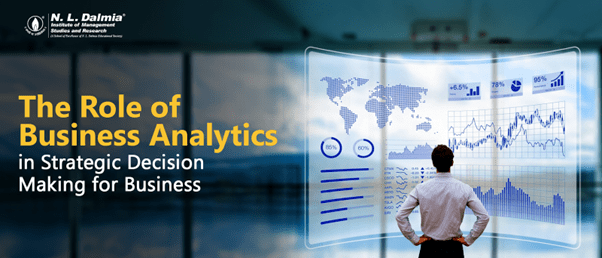
The Role of Business Analytics in Strategic Decision Making for Business
- July 3, 2025
- | MBA, MBA Advice
- | No Comments
In today’s fast-changing business environment, making the right decisions quickly is crucial. If you are aiming for a successful management career, you must understand the importance of business analytics. It has become a vital tool for strategic decision making across industries.
What is Business Analytics?
Business analytics is the process of collecting, analysing and interpreting data to make informed business decisions. You use various statistical and quantitative methods to uncover patterns and trends. These insights help businesses solve problems and seize new opportunities.
The Growing Importance of Business Analytics
In recent years, the importance of business analytics has grown significantly. According to a report by Allied Market Research, the global business analytics market is expected to reach $420 billion by 2027 (Reference: GlobeNewswire). Businesses are increasingly relying on data to drive their strategies.
How Business Analytics Supports Strategic Decision Making
You might wonder about the link between business analytics and decision making. Here are some ways analytics play a crucial role:
- Data-Driven Insights: Analytics provides factual evidence for decision making rather than relying on assumptions.
- Predictive Analysis: You can forecast market trends, helping businesses stay ahead of competitors.
- Risk Management: Analytics identifies potential risks, allowing you to prepare proactive strategies.
- Resource Optimisation: Businesses can allocate resources efficiently by analysing operational data.
When you pursue PGDM in Business Analytics at N. L. Dalmia Institute, you not only learn theories but also apply them in real-world scenarios.
Importance of Business Analytics in Decision Making
Understanding the importance of business analytics in decision making is key to your career success. Companies like Amazon and Netflix use analytics to personalise customer experiences and make strategic moves. When you learn how to analyse and interpret data, you become a valuable asset to any organisation.
Business analytics allows you to transform raw data into meaningful insights. You support decision makers by providing evidence-based recommendations rather than relying on intuition. This reduces the risk of costly errors and improves overall business performance.
In today’s competitive markets, speed and accuracy are critical. Business analytics enables organisations to identify new trends, assess risks and respond to changes faster. It also ensures that resources are used efficiently, leading to better returns on investment.
By mastering analytics, you contribute to building a culture of continuous improvement. You help businesses stay focused, agile and customer-centric in a fast-moving world.
N. L. Dalmia Institute provides global exposure through partnerships with universities abroad. This ensures you are ready to work in both national and international markets.
Key Areas Where Business Analytics Makes a Difference
Here are major areas where analytics impacts decision making:
- Marketing: Understand customer behaviour and optimise campaigns.
- Finance: Analyse investment options and manage risks.
- Human Resources: Predict employee turnover and improve talent acquisition.
- Operations: Streamline processes to improve efficiency.
- Strategy: Create long-term plans based on data-backed projections.
At N. L. Dalmia Institute, you will be mentored by industry practitioners who bring real-world insights into the classroom.
You Develop Through Business Analytics
A strong grasp of analytics sharpens many important skills:
- Critical Thinking
- Problem Solving
- Quantitative Analysis
- Technical Proficiency (Excel, Python, R, SQL)
- Effective Communication
You also build techno-managerial skills essential for dynamic leadership roles.
Why Choose PGDM in Business Analytics at N. L. Dalmia Institute?
When you choose N. L. Dalmia Institute for your PGDM in Business Analytics, you gain more than just a qualification:
- In-demand skills: You build expertise in data analysis, statistical modelling, data visualisation and predictive analytics.
- Hands-on learning: You work with South Asia’s largest Bloomberg Lab, gaining real-time experience with industry-standard tools.
- Industry alignment: The curriculum integrates AI, machine learning and analytics-driven decision-making. This makes you job-ready for top industries.
- High placement potential: There is a high demand for business analysts, data scientists and consultants across sectors like BFSI, IT, consulting, e-commerce and FMCG.
- Global exposure: You gain international perspectives through collaborations, preparing you for global careers.
- Mentorship by industry practitioners: You learn from leaders who bring real-world insights to the classroom.
- Technological and analytical skill development: You become adept in analytical thinking and business problem solving.
- Career advancement: You are prepared to step into roles like Business Analyst, Data Analyst, Data Consultant and Analytics Manager.
These advantages make N. L. Dalmia Institute is one of the top B-schools in Mumbai.
How Business Analytics Prepares You for the Future
Businesses are now integrating AI and machine learning into their analytics processes. When you are skilled in business analytics, you become future-ready. You are not just making decisions based on gut feeling; you are making them based on solid data.
You build a mindset that values evidence, trends and factual information. This approach is critical because companies today operate in highly uncertain markets. By using analytics, you help businesses predict customer needs, market changes and operational challenges before they happen.
As industries across the world continue to digitise, professionals who understand business analytics are in high demand. You will be able to work across sectors like finance, marketing, healthcare and technology. Analytics also prepares you to adapt quickly when industries evolve, making you resilient in your career.
Statistics show that companies that use data-driven strategies are five times more likely to make faster decisions than their competitors. This clearly highlights the growing reliance on analytics.
At N. L. Dalmia Institute, you are trained with the latest tools like Excel, Python, R and Bloomberg Terminal, ensuring you are equipped with global industry standards. You are not just learning theory; you are building skills that future-proof your career.
Conclusion
As a future management professional, understanding the importance of business analytics will put you ahead of others. You will help businesses stay competitive and drive sustainable growth. Business analytics is not just a subject; it is a vital career skill that you must master.
If you are ready to take the next step towards a successful career, join the PGDM in Business Analytics program at N. L. Dalmia Institute of Management Studies and Research. Develop your skills, gain global exposure and become a dynamic leader of tomorrow.
Apply Now and Shape Your Future with N. L. Dalmia Institute!

The Role of Pursuing PGDM from N. L. Dalmia Institute
- July 1, 2025
- | MBA, MBA Advice
- | No Comments
Selecting the right institute for a Post Graduate Diploma in Management (PGDM) is a future-defining choice. Given the many choices, it is imperative that you choose an institute that provides a robust academic curriculum, industry exposure and high placement opportunities. If you are questioning how good N. L. Dalmia Institute is, this blog will give you insights into its special strengths and why it stands out as a top choice for PGDM aspirants.
Why N. L. Dalmia Institute for PGDM?
N. L. Dalmia Institute has established a niche position in management education. Set up with the mission to offer world-class education, the institute has been consistently producing high-quality learning outcomes, up-to-date infrastructure and good industry connections.
One of the key benefits of selecting N. L. Dalmia Institute is that it is both nationally and internationally accredited. The PGDM course is at par with an MBA, which means students receive an internationally recognised qualification. The institute is also ESG certified, which indicates that it adheres to ethical and sustainable business methods. In addition to this, it is AICTE, AIU, NBA, NAAC (A+ Grade) and SAQS accredited, which guarantees that academic standards remain at the highest.
Apart from its accreditations, the institute has earned a name for its industry-centric curriculum. The program is well designed to close the gap between theory and practice, incorporating live case studies, hands-on projects and Bloomberg Terminal training. These aspects enable students to understand real-life business challenges and are empowered with skills to succeed in a competitive marketplace.
A Transformative Learning Experience
1. Modern Learning Facilities and Infrastructure
One of the defining features of N. L. Dalmia Institute is its ultra-modern infrastructure to facilitate a deeply engaging learning environment. The institution has South Asia’s biggest freestanding Bloomberg Lab where students can directly tap into live financial information, analysis and research tools. It is irreplaceable for finance specialising students as it delivers experiential exposure to trends in the markets and investing plans.
The campus boasts an advanced digital library, giving students access to national and global research journals, books and case studies. Smart classrooms, seminar hall and collaborative learning tools are also part of the academic experience.
2. Industry-Focused Curriculum and Seasoned Faculty
N. L. Dalmia’s PGDM program is aimed at satisfying the needs of a fast-changing business environment. The curriculum is updated periodically to reflect the new industry trends, technology developments and international business practices.
Students have the option to specialise in Finance, Marketing, Human Resources and Business Analytics, enabling them to align their education with their career aspirations. The faculty consists of well-qualified doctorate-level professors from IITs and IIMs, along with industry experts who bring practical insights into the academic environment.
The institute also focuses on experiential learning via live projects, guest lectures and mentorship programs so that students not only graduate with knowledge but also with practical skills.
Life at N. L. Dalmia Institute – A Balance of Academics and Beyond
1. Skill Development and Personality Enhancement
Life at N. L. Dalmia Institute is not merely academic, it’s all about development. The institute provides different training programs to improve soft skills, leadership skills and communication skills. These sessions improve the confidence level of students and help them prepare for corporate hurdles.
2. Corporate Exposure and Internship Opportunities
Having a close link with the corporate sector is vital for any management school and N. L. Dalmia Institute scores high in this regard. The school has collaborations with prominent organisations, which guarantee students to gain practical experience through internships, live projects and industrial visits.
PGDM Placements in N. L. Dalmia Institute
Placement opportunities are a prime concern for students who take up PGDM and N. L. Dalmia PGDM placements are among the best in Maharashtra.
The institute maintains a special placement cell that collaborates with the premier recruiters to help students get employed in renowned organisations. A number of companies from various industries visit the campus each year for the placement process, presenting opportunities in Finance, Marketing, Human Resources, Consulting and Business Analytics.
A few of the leading recruiters are Hindustan Unilever Limited, Federal Bank, Morgan Stanley, Deutsche Bank and more. The institute’s powerful alumni base also contributes to the facilitation of students with industry professionals and the identification of career prospects.
Students tend to ask themselves, what will be life after a PGDM course? N. L. Dalmia Institute graduates are placed in well-paying jobs with scope for advancement in investment banking, business strategy, marketing and financial consulting. Equipped with a solid managerial knowledge base and practical corporate experience, they are well on their way to leadership positions in the corporate sector.
Why N. L. Dalmia Institute Standing Out Among PGDM Institutes in Maharashtra
If you are looking for a PGDM in Maharashtra, N. L. Dalmia Institute of Management Studies and Research is the one that should be on your mind. The location of the institute in Mumbai, the financial capital of India, provides students with exposure to a vibrant business environment. The fact that it is close to corporate centers offers unparalleled opportunities for networking, internships and placements.
Another plus point is the up to 100% scholarships for meritorious students. The institute is committed to developing talent and offers financial aid to those who perform well academically.
N. L. Dalmia Institute Among Top B-Schools in Mumbai
While searching for the best B-schools in Mumbai, N. L. Dalmia Institute is one of the best institutions. It is known for its tough academic framework, robust placement history and industry-specific curriculum.
In comparison to other business schools, N. L. Dalmia Institute provides a high return on investment (ROI), hence it is a great option for students seeking quality education along with great career opportunities. The combination of contemporary infrastructure, experienced professors and strong corporate connections makes it among the most popular management institutes in Mumbai.
Conclusion
If you wonder how good N. L. Dalmia Institute, the reply is evident – it is among the top PGDM institutes in India with an ideal combination of academic excellence, industry exposure and robust placements.
For students wanting to create a successful career in Finance, Marketing, HR or Business Analytics, N. L. Dalmia Institute offers the perfect learning platform. Its cutting-edge Bloomberg Lab, exceptional faculty and international exposure help ensure that the students are thoroughly equipped to excel in today’s fast-paced business environment.
If you are planning a PGDM in Mumbai, N. L. Dalmia Institute must be your first priority for a valuable learning experience and a successful career ahead.

Marketing Mastery: Strategies for the Digital Era
- June 20, 2025
- | MBA, MBA Advice
- | No Comments
The world of marketing is changing every day. You no longer compete with just a few brands in your city. You compete with thousands across the globe. If you want to stand out, you must understand how marketing works today.
The digital era is full of opportunities. It offers you tools, platforms and data to create powerful connections with your audience. But to use them well, you must know the right strategies. You must blend traditional marketing wisdom with modern marketing techniques.
If you dream of becoming a marketing leader, this is your time. And it all begins with learning the principles of marketing for a digital age.
Why You Must Rethink Marketing in the Digital Age
You live in a world where trends change in a matter of weeks. A campaign that works today might fail next month. Your customers scroll faster than ever and skip ads they do not connect with.
This is why marketing in the digital era needs more than creativity. You need insights. You need real-time data. You need tools that help you understand your audience.
You must know:
- How to use storytelling across platforms
- How to read data and predict customer behaviour
- How to build trust in a noisy digital world
- How to adapt your strategy when algorithms shift
A strong foundation in digital marketing gives you the skills to stay ahead. It helps you think not just like a creator but also like a strategist.
4 Principles of Marketing Strategy in the Digital Age
To succeed, you must follow the 4 principles of marketing strategy in the digital age. These will guide your choices and sharpen your thinking.
1. Customer Centricity
Your customer is not just someone who buys. They are someone who feels, compares and expects. Every campaign must speak to their needs. You must listen, engage and build relationships.
2. Agility and Adaptability
The digital world rewards quick thinkers. Your marketing strategy must allow room for change. Run experiments. Learn from failures. Be ready to pivot.
3. Data-Driven Thinking
Every digital action leaves a footprint. You can track clicks, views, shares and even sentiment. This helps you understand what works. It also helps you save money and time.
4. Integration Across Channels
You do not market on just one platform. You need email, social media, SEO and more. All your efforts must work together. This creates a strong and unified brand message.
These principles turn you from a marketer into a marketing master.
How a PGDM in Marketing Sets You Apart
A structured learning path helps you apply these principles. The PGDM in Marketing from N. L. Dalmia Institute gives you exactly that. You learn not just theories but also how to use them in real-world settings.
Here’s what you gain:
- In-depth knowledge of brand building, market research and consumer behaviour
- Hands-on exposure to modern marketing techniques such as digital advertising and influencer marketing
- Tools to master SEO, content marketing, CRM and social media campaigns
- Projects and internships with leading brands
You also gain access to highly qualified doctorate faculty who bring real-world insights from IITs and IIMs.
Marketing Skills That Recruiters Want
Companies look for marketers who are ready to hit the ground running. Your PGDM training teaches you to:
- Analyse consumer insights
- Launch data-driven campaigns
- Design engaging content
- Present ideas with confidence
- Manage budgets and deliver ROI
These are not just nice-to-have skills. They are what will get you hired and promoted.
Global Exposure through International Linkages makes your learning at N. L. Dalmia Institute unique – You interact with international faculty. You learn about global consumer behaviour and understand cross-border marketing.
Your Journey from Student to Marketing Leader
Success does not happen overnight. But when you choose the right path, your growth speeds up. The PGDM in Marketing shapes your journey step by step.
- You begin with strong classroom learning
- You sharpen your thinking through case studies
- You build campaigns during internships
- You network with experts through events
Every step brings you closer to your dream role in a top brand or your own startup.
Why Choose a Top B-School in Mumbai
Location matters. Studying in Mumbai, the business capital of India, gives you unmatched exposure. You get access to top agencies, live projects and industry mentors.
Top B-schools in Mumbai like N. L. Dalmia brings the market to your classroom. You do not just learn theory. You learn how marketing happens in real life.
Ready to Become a Master in Marketing?
You have the drive. You have the vision. Now you need the right platform.
The PGDM in Marketing from N. L. Dalmia is more than just a course. It is your launchpad into a successful marketing career. You gain skills that are relevant. You learn from experts. You become the kind of marketer the world needs.
Join N. L. Dalmia Institute of Management Studies and Research. Unlock your potential in the ever-evolving world of marketing.
Apply now and begin your journey towards becoming a marketing leader.

Leadership in the Digital Age: Insights from N. L. Dalmia’s Curriculum
- June 17, 2025
- | MBA, MBA Advice
- | No Comments
Understanding Leadership in the Digital Age
The digital revolution has completely transformed the way businesses operate, compelling organisations to rethink leadership strategies. Traditional leadership models that relied on experience and intuition are no longer sufficient in a world where technology evolves rapidly. Leaders must now be proactive, adaptable and technologically proficient to navigate digital disruption successfully.
To meet these challenges, businesses require breakthrough leadership in the digital age, where leaders can harness emerging technologies, drive digital transformation and lead with a data-driven mindset. At N. L. Dalmia Institute of Management Studies and Research, leadership education is designed to prepare students for this new era. The institute integrates digital competencies, strategic thinking and innovation into its curriculum, ensuring graduates are well-equipped to take on leadership roles in dynamic industries.
The Growing Importance of Leadership Education and Development
Leadership is no longer just about authority and decision-making; it is about vision, agility and the ability to lead organisations through continuous transformation. Structured leadership education and development is crucial for grooming future leaders who can:
- Adapt to changing market dynamics.
- Manage digital transformation initiatives.
- Build and lead high-performing digital teams.
- Leverage data analytics for strategic decision-making.
N. L. Dalmia Institute’s curriculum focuses on these essential leadership skills, ensuring students are prepared for the future of business. Through industry-oriented learning modules, real-world business challenges and global exposure, students develop the necessary leadership competencies to thrive in the digital economy.
Developing Digital-First Leaders at N. L. Dalmia Institute
The institute has structured its leadership programs around key pillars that define leadership in the digital age:
1. Integrating Digital Technology into Leadership
Modern leaders must understand and leverage digital tools to improve efficiency, innovation and decision-making. At N. L. Dalmia Institute students gain hands-on experience with advanced financial and business analytics tools, including South Asia’s largest Bloomberg Lab. This real-time exposure ensures they develop a deep understanding of data-driven leadership.
2. Emphasising Data-Driven Decision-Making
Data is at the heart of digital transformation. Leaders must make strategic decisions based on insights derived from big data, AI and machine learning. N. L. Dalmia Institute’s curriculum includes specialised courses in business analytics and digital transformation, enabling students to develop expertise in data interpretation and strategic application.
3. Fostering Innovation and Adaptability
One of the hallmarks of breakthrough leadership in the digital age is the ability to innovate and pivot when required. The institute encourages students to work on real-world projects, case studies and simulations that foster creativity and problem-solving skills.
Key Differentiators That Make N. L. Dalmia Institute Stand Out
A strong leadership program must be backed by world-class faculty, cutting-edge infrastructure and a global perspective. N. L. Dalmia Institute offers all this and more through:
- Highly Qualified Doctorate Faculty Team Including IIT’s and IIM’s: Students receive mentorship from some of the most accomplished academic and industry experts, ensuring exposure to both theoretical and practical insights.
- Techno-Managerial Skills for Dynamic Leadership: The institute places strong emphasis on blending technological proficiency with managerial expertise, ensuring students develop a well-rounded leadership approach.
- Global Exposure and Industry Collaborations: International linkages and partnerships help students gain a broader understanding of leadership practices across different business landscapes.
Why Leadership Education and Development Matters More Than Ever
The digital age has made leadership a complex and multifaceted role. Modern leaders are expected to:
- Lead remote and hybrid teams effectively.
- Implement AI-driven business strategies.
- Manage cybersecurity risks and digital ethics.
- Stay ahead of emerging trends like blockchain, IoT and automation.
This is where structured leadership education and development becomes crucial. N. L. Dalmia Institute’s programs ensure students are not just familiar with these aspects but are also capable of applying them in real-world business scenarios.
How N. L. Dalmia Institute Prepares Future Leaders
The institute’s leadership development framework includes:
- Experiential Learning: Hands-on projects, industry internships and leadership simulations to build real-world expertise.
- Personalised Mentorship: Guidance from faculty members who are experts in finance, marketing, technology and strategy.
- Interdisciplinary Learning: A curriculum that blends management principles with digital innovation.
Why N. L. Dalmia Institute is Among the Top B-Schools in Mumbai
For those aspiring to build a career in leadership in the digital age, N. L. Dalmia Institute is the ideal choice. The institute has consistently ranked among the top B-schools in Mumbai due to its future-focused curriculum, strong industry connections and global approach to leadership education.
With its commitment to breakthrough leadership in the digital age, N. L. Dalmia Institute continues to shape professionals who can lead organisations through technological change and business transformation. Whether you aim to be a corporate leader, an entrepreneur or a digital strategist, the institute provides the perfect platform to develop the skills needed to excel in the modern business world.

The Art of Business: Skills Every Business Leader Needs
- June 12, 2025
- | MBA, MBA Advice
- | No Comments
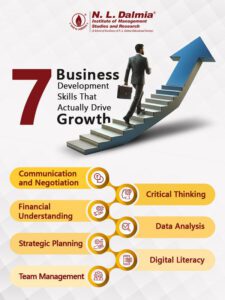
Becoming a successful business leader is more than just having a degree. It is about developing the right mindset and acquiring professional business skills that help you make confident decisions and drive progress. You already know the value of management education. Now it’s time to build the skills that turn knowledge into action.
You want to lead, influence and grow. But what stands between you and that goal are the right skills. Whether you’re enrolled in a PGDM or Global MBA, you need more than textbooks. You need practical expertise.
Let’s walk through the core skills every future business leader like you must develop.
Build Strong Communication Skills
Good communication shapes your leadership style. You must know how to express ideas clearly, listen with purpose and build understanding in a team. You often need to present ideas to investors, motivate your team, or explain strategies to clients. Each of these tasks becomes easier when your communication is sharp and focused.
- Practice active listening
- Improve public speaking
- Write with clarity and purpose
This skill also helps in negotiations and networking, two critical areas in business success.
Develop Strategic Thinking
Leaders don’t just solve problems. They anticipate them. Strategic thinking allows you to connect the dots between different areas of a business. It helps you analyse market trends, competitor actions and customer needs to form long-term plans.
When you master this skill, you start thinking like a CEO. You become someone who looks beyond today and prepares for tomorrow.
Learn Financial Literacy
Numbers tell the story of any business. Understanding financial statements, balance sheets and cash flow gives you control over decisions. If you are serious about your journey in finance, marketing, or analytics, you must be comfortable with finance basics.
This is where N. L. Dalmia’s Bloomberg Lab experience becomes a strong advantage. You get hands-on exposure to real-time market data and financial modeling tools.
Embrace Innovation and Adaptability
The business world changes fast. You need to adapt faster. Whether it’s new technology, market disruption, or customer behavior shifts, you must stay flexible. Professional business skills now include the ability to lead change and not resist it.
Being innovative means, you explore new ideas. Being adaptable means, you know when to change direction. These two go hand in hand.
Build Emotional Intelligence (EQ)
You are not managing machines. You are leading people. Emotional intelligence allows you to understand team dynamics, resolve conflicts and motivate others. It helps you stay calm during stress and make people feel valued.
- Show empathy
- Understand team emotions
- Respond, don’t react
Strong EQ can help you retain talent and build a collaborative work culture.
Strengthen Decision-Making Skills
You will face decisions every day. Some will be small. Some will shape the future of your business. You need to decide fast, based on data and judgment. Your Global MBA or PGDM course will teach you frameworks, but you need to apply them confidently.
Use logic, experience and instinct. Learn from outcomes, good or bad. Over time, your decision-making will become sharper and more impactful.
Practice Time and Team Management
Managing time is not just about personal productivity. It affects team performance, project delivery and client trust. As a future leader, you must also know how to manage other’s time.
- Set realistic deadlines
- Prioritise tasks
- Delegate wisely
When your team sees you handle time well, they follow your lead.
Gain Global Perspective
Business is no longer limited to one country. Even startups today think globally. Exposure to global trends, markets and cultures builds your business vision. N. L. Dalmia Institute’s Global MBA structure gives you this perspective by allowing you to study in India and abroad.
You work with diverse teams. You learn new ways to solve problems. You come out not just job-ready but world-ready.
Know the Best Skills to Learn for Business
Let’s summarise what you should focus on as a PGDM or Global MBA student:
- Communication
- Strategy
- Financial literacy
- Innovation
- Emotional intelligence
- Decision-making
- Time management
- Global mindset
These are not just business skills for entrepreneurs. These are core tools for anyone who wants to grow into leadership. Whether you aim to start your own business or become a senior leader in a top firm, these skills make all the difference.
How to Become Successful in Business
You succeed in business when you combine knowledge, action and consistency. Your PGDM or Global MBA is your starting point. From there, practice skills daily. Take feedback seriously. Stay curious and keep learning.
Success is not one big leap. It is many small steps done right. Build relationships. Stay focused on results. Keep your goals clear and adjust your path when needed.
Your ability to learn and adapt is your biggest edge.
Bridge the Gap Between Learning and Leading
Now that you know the skills needed for business development, it’s time to bridge the gap. N. L. Dalmia’s programs are designed to help you move from student to leader. You don’t just learn theory. You apply it.
- Real-world case studies
- Industry visits
- Bloomberg terminal training
- Global exposure
- Mentoring by industry experts
This blend of practical and academic learning shapes you into a confident, skilled and job-ready professional.
Step Into One of the Top B-Schools in Mumbai
You want to join a place that understands your goals and supports your growth. N. L. Dalmia Institute of Management Studies and Research ranks among the top B-schools in Mumbai. It offers AICTE-approved PGDM courses in Mumbai with specialisations that match the industry needs.
You get access to cutting-edge resources. You learn from faculty with industry expertise. You gain real exposure, whether you take up PGDM in Finance, Marketing, HR, or Business Analytics. N. L. Dalmia’s Global MBA adds international depth to your profile. The programs are crafted to match what employers expect and what industries demand.
Ready to Start?
If you’re serious about becoming a business leader, then the time to act is now. N. L. Dalmia offers the tools, mentors and opportunities to turn your ambition into achievement.
Start your journey toward achieving success. Explore PGDM and Global MBA programs at N. L. Dalmia today.

Various Career Opportunities in PGDM Courses in India
- June 10, 2025
- | MBA, MBA Advice
- | No Comments
A PGDM course (Post Graduate Diploma in Management) is one of the most sought-after programs for students aiming to build a strong foundation in management. Unlike traditional MBA programs, PGDM courses are industry-oriented, practical and designed to meet the dynamic needs of the corporate world. With the rising demand for skilled managers, the PGDM value in India has increased significantly, offering a wide range of career opportunities across industries.
If you’re wondering about the career options after PGDM, this blog explores various career paths you can take and how this qualification can help you build a rewarding career.
Why Choose a PGDM Course?
A PGDM course equips students with essential management skills, leadership qualities and business acumen. It provides specialised knowledge in domains like Finance, Marketing, Human Resources, Business Analytics and Operations, making students job-ready from day one.
Institutes that are recognised as National and International Accredited Institutions ensure that students receive world-class education aligned with global standards. These institutions provide a robust academic curriculum, experienced faculty and industry collaborations that enhance career prospects.
The career after PGDM is highly promising because the program incorporates case studies, internships, industry projects and corporate interactions that ensure real-world exposure. Furthermore, the curriculum is continuously updated to align with the latest business trends and market demands.
Top Career Options After PGDM
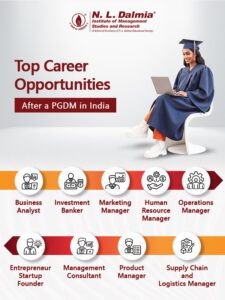
A PGDM qualification prepares students for leadership roles in various industries. Here are some of the most lucrative and rewarding career options after PGDM:
1. Business Analyst
With businesses becoming increasingly data-driven, a career after PGDM in Business Analytics is in high demand. Companies need skilled professionals who can:
- Analyse market trends and business performance.
- Interpret large datasets to drive strategic decisions.
- Improve operational efficiency and problem-solving.
2. Investment Banker
For those specialising in Finance, investment banking is a highly lucrative field. Investment bankers help organisations with:
- Raising capital for businesses.
- Managing mergers and acquisitions (M&A).
- Providing strategic financial advisory services.
The finance industry values professionals with expertise in financial modeling, valuation techniques and risk assessment.
3. Marketing Manager
For those inclined toward branding, advertising and sales strategies, marketing management is an ideal career after PGDM. Companies rely on marketing managers to:
- Develop and execute marketing campaigns.
- Analyse consumer behavior and market trends.
- Boost brand positioning and increase revenue.
With the rise of digital marketing, professionals with knowledge of SEO, social media marketing and performance marketing have an added advantage.
4. Human Resource (HR) Manager
If you have strong interpersonal skills and enjoy managing people, HR management is a great option. HR professionals handle:
- Recruitment and talent acquisition.
- Employee engagement and training programs.
- Performance management and organisational development.
With the increasing focus on workplace culture, employee well-being and HR analytics, skilled HR professionals are in high demand.
5. Operations Manager
Operations managers ensure smooth business processes and optimise resources for efficiency. Their key responsibilities include:
- Supply chain management and logistics.
- Process optimisation and cost reduction.
- Implementing quality control measures.
This role is crucial in industries such as manufacturing, e-commerce, healthcare and retail.
6. Entrepreneur/Startup Founder
Many PGDM graduates choose to start their own businesses. The PGDM value in India is high because it equips students with:
- Critical thinking and problem-solving skills.
- Business strategy and financial planning expertise.
- Risk assessment and leadership capabilities.
With access to startup incubators, venture capital funding and mentorship programs, PGDM graduates are well-prepared to launch and scale successful businesses.
7. Management Consultant
Management consulting is a high-paying and prestigious career path. Consultants help organisations with:
- Business transformation and process optimisation.
- Strategic planning and financial restructuring.
- Market research and competitive analysis.
Consultants work with top firms and government organisations to solve business challenges and improve efficiency.
8. Product Manager
A relatively new but high-demand role, Product Managers work at the intersection of technology, business and user experience. They:
- Define product vision and strategy.
- Collaborate with engineers and designers to build products.
- Use market research to improve product offerings.
This role is ideal for PGDM graduates specialising in Marketing, Business Analytics or IT.
9. Supply Chain & Logistics Manager
With the growth of e-commerce and global trade, supply chain and logistics management has become a crucial career option. Professionals in this field handle:
- Inventory management and demand forecasting.
- Vendor and supplier coordination.
- Warehouse management and last-mile delivery optimisation.
Global Exposure through International Linkages
A PGDM course from a reputed institution not only provides national-level recognition but also offers Global Exposure through International Linkages. Many top B-schools in India have collaborations with international universities, allowing students to participate in:
- Exchange programs and study abroad initiatives.
- Global internships with multinational corporations.
- Cross-cultural management training and international networking opportunities.
This exposure gives students an edge in the competitive job market, helping them secure global job opportunities.
Conclusion
A PGDM course opens doors to numerous opportunities, whether in corporate roles, consulting, entrepreneurship, or analytics. The career options after PGDM are diverse, offering excellent growth prospects across industries. With strong industry connections, practical exposure and skill-based learning, PGDM graduates find themselves well-prepared for the competitive job market.
If you’re considering PGDM courses in India, choosing the right institute can make all the difference. Top-tier institutes like N. L. Dalmia Institute of Management Studies and Research, a National and International Accredited Institution, provides world-class education, excellent placement support and a strong alumni network, ensuring a successful and fulfilling career.
Additionally, with Global Exposure through International Linkages, students can explore international career opportunities, making their PGDM journey even more valuable.
Looking to build a successful career in management? Explore the PGDM programs at N. L. Dalmia Institute today!

Exploring Strategic Marketing With PGDM In Business Analytics For Current Business Landscapes
- June 6, 2025
- | MBA, MBA Advice
- | No Comments
The business world is evolving at a rapid pace and marketing has transformed from traditional promotional activities to a data-driven, analytical process. Companies today require well-planned strategies to stay competitive, making strategic market analysis a vital component of business success. Marketing professionals must understand consumer behaviour, industry trends and competitive dynamics to craft effective strategies that yield long-term results.
With businesses relying more on insights derived from data, professionals with expertise in analytics are in high demand. Understanding what is strategic marketing analysis helps businesses assess market conditions, identify growth opportunities and make informed decisions. This analytical approach enables companies to develop well-structured marketing campaigns that align with business objectives.
A strong foundation in data-driven marketing strategies can be acquired through specialised courses such as a PGDM in Business Analytics. This qualification prepares professionals to navigate the complexities of modern marketing by equipping them with the skills needed to analyse data and drive marketing success.
Understanding What is Strategic Marketing Analysis
Before businesses can develop successful marketing strategies, they need to answer an essential question—what is strategic marketing analysis? It is a structured approach that involves evaluating market conditions, understanding customer needs and assessing competitive landscapes to create data-backed marketing strategies.
A well-conducted strategic market analysis enables businesses to identify market trends, anticipate shifts in consumer behaviour and craft campaigns that resonate with their audience. By leveraging data analytics and consumer insights, companies can refine their messaging and positioning, ensuring they remain relevant in an ever-changing market.
Businesses that fail to conduct proper market analysis often struggle with ineffective campaigns and wasted resources. Instead of relying on guesswork, strategic analysis provides a factual basis for marketing decisions, reducing risks and enhancing the impact of marketing efforts.
The Role of Strategic Market Analysis in Business Growth
Marketing strategies must be designed with precision and backed by real-time data. A strategic market analysis provides businesses with a competitive advantage by enabling them to make well-informed decisions. Here’s how it benefits organisations:
1. Accurate Market Forecasting
By assessing consumer demand, industry trends and competitor activities, businesses can predict future market conditions. This allows them to adjust their strategies accordingly and maintain a strong market presence.
2. Effective Product Positioning
Understanding the market helps companies refine their product positioning. Businesses can tailor their messaging to meet customer expectations and ensure their brand stands out from competitors.
3. Enhanced Customer Experience
Consumers today expect personalised interactions and tailored offerings. A well-executed marketing strategy backed by strong analysis ensures that businesses can deliver meaningful customer experiences that enhance brand loyalty.
4. Risk Reduction and Better Decision-Making
A data-driven approach minimises uncertainty. Companies that conduct thorough market research are better prepared for industry shifts and can adapt quickly to changes.
5. Maximising Return on Investment (ROI)
Marketing budgets need to be allocated wisely. Businesses that rely on strategic market analysis can focus on high-performing channels and strategies that deliver the best returns.
How Businesses Implement Strategic Marketing Analysis
Many organisations have adopted strategic frameworks to guide their marketing efforts. Here are some key steps businesses follow when implementing strategic market analysis:
- Market Research – Gathering data on consumer behaviour, purchasing patterns and emerging trends provides a foundation for effective marketing decisions.
- Competitor Analysis – Understanding what competitors are doing helps businesses refine their unique selling propositions and identify gaps in the market.
- Target Audience Segmentation – Analysing customer demographics and preferences allows businesses to create more personalised and effective marketing campaigns.
- Performance Tracking and Adjustments – Continuous monitoring of marketing strategies helps businesses refine their campaigns and improve results over time.
By following a structured analytical approach, businesses can gain deeper insights into their markets and optimise their strategies for sustained success.
How Data-Driven Marketing Gives Businesses a Competitive Edge
In today’s digital age, businesses have access to vast amounts of data. Leveraging this data effectively is key to designing marketing strategies that work. Marketing professionals who understand what is strategic marketing analysis are better equipped to handle the dynamic nature of the business environment.
Here’s how data-driven marketing helps businesses outperform their competitors:
- Personalised Marketing – Companies can use consumer insights to create targeted campaigns that resonate with individual preferences.
- Optimised Advertising Spend – Businesses can allocate budgets to high-impact channels that drive the most engagement and conversions.
- Informed Decision-Making – Instead of relying on assumptions, data analytics allows companies to make evidence-based marketing decisions.
- Real-Time Adaptability – Businesses can track customer responses and adjust their strategies in real time to improve effectiveness.
Challenges in Strategic Market Analysis and How to Overcome Them
While strategic market analysis provides several advantages, it also presents challenges that businesses must overcome to maximise its benefits.
- Data Overload – With vast amounts of data available, businesses must filter relevant information and focus on actionable insights.
- Changing Consumer Preferences – Rapid shifts in consumer behaviour require businesses to constantly update their marketing strategies.
- Competitive Pressure – Staying ahead in a competitive market demands continuous innovation and adaptation.
- Technological Advancements – Companies must invest in the latest analytics tools and marketing technologies to stay relevant.
To address these challenges, businesses must invest in skilled marketing professionals who can interpret data accurately and make informed strategic decisions.
PGDM in Business Analytics is the Right Choice for Marketing Professionals
As businesses continue to embrace data-driven decision-making, marketing professionals must upskill themselves to stay relevant. A PGDM in Business Analytics equips students with the necessary knowledge to integrate analytics into marketing strategies effectively.
Institutions like N. L. Dalmia Institute of Management Studies and Research offer industry-focused programs that provide students with a strong foundation in business analytics and strategic marketing. The institute’s PGDM is equivalent to an MBA, ensuring students receive an education that meets global standards. Additionally, N. L. Dalmia focuses on techno-managerial skills for dynamic leadership, preparing students to navigate the complexities of the corporate world with confidence. By enrolling in a PGDM in Business Analytics, professionals gain a competitive edge in the job market and can contribute significantly to the success of modern businesses.

What is the Scope of PGDM in Business Analytics?
- June 4, 2025
- | MBA, MBA Advice
- | No Comments
Businesses increasingly rely on analytics to drive decision-making processes in the modern data-driven world. A PGDM in Business Analytics equips students with the skills and knowledge to thrive in this environment. Let’s explore the scope of this program, career opportunities and its relevance in the Indian context.
Understanding PGDM in Business Analytics
A PGDM in Business Analytics is a postgraduate diploma program designed to give students a robust understanding of business analytics tools and techniques. The curriculum typically covers various aspects of data analysis, statistics and machine learning, enabling students to analyse and interpret complex data sets to inform business strategies.
Why Pursue a PGDM in Business Analytics?
The primary reason for pursuing a PGDM in Business Analytics in India is the growing demand for data-literate professionals. Companies across sectors are leveraging big data to gain insights and improve their operations and as a result, the need for skilled business analysts has skyrocketed.
Career Prospects and Opportunities

The scope of PGDM in Business Analytics is extensive, offering diverse career opportunities. Graduates can find roles in various sectors, including finance, healthcare, marketing and technology. Some of the prominent job titles include:
- Data Scientist: Responsible for analysing large sets of structured and unstructured data to uncover patterns and provide actionable insights.
- Business Analyst: Focuses on understanding business needs and designing solutions to improve processes and systems.
- Market Research Analyst: Analyses market trends to help businesses understand what products people want, who will buy them and at what price.
- Quantitative Analyst: Uses statistical methods to manage risks and make informed decisions in finance and investment sectors.
- Healthcare Analyst: Works within the healthcare industry to improve patient outcomes through data analysis.
These roles offer lucrative salaries. For instance, the average salary for a Business Analyst in India is around INR 8-12 LPA. At the same time, data scientists can earn up to an LPA of INR 20, depending on their experience and expertise (GetMyUni) (CollegeDekho).
PGDM in Business Analytics in India
India is witnessing a rapid increase in the adoption of business analytics. Educational institutions like N. L. Dalmia Institute of Management Studies and Research offer specialised programs tailored to meet industry demands. These programs blend theoretical knowledge and practical skills through internships and industry projects.
Admission Requirements and Curriculum
To enrol in a PGDM in Business Analytics, candidates typically need a bachelor’s degree in any discipline with a minimum percentage and they might have to clear entrance exams like CAT, XAT, MAT, MH-CET, ATMA or CMAT. The curriculum often includes data mining, predictive analytics, business intelligence and machine learning.
Benefits of Pursuing PGDM in Business Analytics
One significant benefit of pursuing a PGDM in Business Analytics is the hands-on experience gained through practical training. Many programs incorporate real-world projects and internships, allowing students to apply their theoretical knowledge in practical scenarios. This enhances their learning experience and makes them job-ready upon graduation.
Moreover, the interdisciplinary nature of business analytics means that graduates can work in various domains. Whether it’s optimising supply chain logistics, improving healthcare outcomes, or enhancing customer experiences in retail, business analytics applications are vast and varied.
Future Trends and Higher Education
The field of business analytics is continually evolving with advancements in technology. Graduates can further their education by pursuing PhDs in related fields such as Business Analytics, Data Science, or specialised certifications to stay updated with the latest trends and tools.
Emerging technologies like artificial intelligence (AI) and machine learning (ML) are becoming integral to business analytics. Staying abreast of these developments can provide a competitive edge and even more career opportunities.
Challenges in Business Analytics
While the scope of PGDM in Business Analytics is broad, it also comes with challenges. Data privacy and security are significant concerns, given the sensitive nature of the information handled. Professionals in this field must be adept at navigating ethical considerations and ensuring compliance with data protection regulations.
Additionally, the dynamic nature of technology means that continuous learning is essential. Professionals must be committed to lifelong learning to keep pace with new tools and methodologies.
Conclusion
The PGDM in Business Analytics offers a promising career path with its vast scope and relevance in today’s data-centric business environment. By equipping students with the necessary skills to analyse and interpret data, this program opens doors to numerous high-paying and intellectually stimulating job opportunities.

The Evolving Landscape of Indian Management Education
- June 2, 2025
- | MBA, MBA Advice
- | No Comments
Management education in India has undergone significant transformations over the decades. Today, it is viewed not just as a pathway to prestigious job titles and lucrative paychecks but as a comprehensive grooming ground that prepares students for the dynamic global market.
In this blog, we will explore the evolution of management education in India, its current scope and the myriad career opportunities it offers. We’ll also take a closer look at PGDM programs and their relevance in today’s job market.
A Brief History: Evolution of Management Education in India
The journey of management education in India began in the early 1950s with the establishment of the first Indian Institutes of Management (IIMs) by the Government of India in collaboration with leading American universities. This initiative aimed to create a pool of elite managers to lead the country’s burgeoning public and private sectors. Over the years, the curriculum has evolved from traditional commerce teachings to include a broader spectrum of topics such as economics, organisational behavior and information systems, reflecting the complexities of modern business environments.
Current Landscape and Scope of Management Education in India
Today, the scope of management education in India is broader than ever, catering not just to the corporate sector but also to entrepreneurs and other professionals looking to enhance their strategic thinking and operational skills. The curriculum now encompasses theoretical knowledge and practical exposure to real-world business problems through industry professionals’ internships, workshops and guest lectures. This holistic approach ensures that graduates are well-versed in textbook knowledge and equipped to tackle the challenges of the real world.
Management programs, especially Postgraduate Diploma in Management (PGDM) programs, have become increasingly popular among students seeking specialised knowledge in marketing, finance, human resources and operations. These courses are known for their rigorous training and industry-aligned curriculum, significantly enhancing employability.
PGDM Programs: A Gateway to Career Opportunities
PGDM programs in India are particularly renowned for their focus on developing practical skills and analytical abilities. Offered by autonomous institutes that are not affiliated with any university, these programs are flexible and adapt quickly to changes in business practices and market requirements. But, is PGDM worth in India? Absolutely. The value of a PGDM is recognised by employers across the country and globally, making it a worthwhile investment for those aspiring to climb the corporate ladder or venture into entrepreneurship.
Graduates of PGDM programs find themselves well-prepared for a variety of roles in industries ranging from financial services to consulting and beyond. This versatility opens up numerous career opportunities after PGDM, including strategic roles in top multinational companies, leading management positions in emerging startups, or even the foundation to launch one’s own business.
Career Opportunities After PGDM
The career opportunities after PGDM are vast and varied. Employers value PGDM graduates for their advanced management skills, strategic orientation and ability to innovate and adapt. From leadership roles in project management, marketing strategy and financial planning to more niche fields like digital marketing and international business, the avenues are plentiful.
Integrating Technology in Management Education
One significant aspect of the evolution of management education in India is the integration of technology. Institutions have recently embraced digital tools and platforms to enhance learning experiences and better prepare students for a technology-driven business world. The inclusion of technology in management curricula has transformed traditional learning paradigms from online simulations and virtual reality (VR) case studies to data analytics and artificial intelligence (AI) applications. This technological shift not only improves the accessibility and flexibility of education but also equips students with crucial digital skills required in today’s workplaces.
The Role of Ethics and Sustainability
Another key development in the scope of management education in India is the increasing emphasis on ethics and sustainability. With global challenges such as climate change and corporate governance failures, business schools across India are now incorporating courses emphasising ethical decision-making and sustainable business practices. This shift reflects a broader global trend towards responsible management education, where future leaders are taught the importance of balancing profit with societal and environmental impacts.
International Exposure and Global Readiness
To ensure that students are globally competitive, many management programs now offer international exposure through exchange programs, global internships and collaborations with foreign universities. Such experiences expose students to diverse business environments, enhancing their understanding of global markets and cultures. Given the increasingly international nature of business operations, this global readiness is crucial and there is a need for managers who can navigate diverse regulatory, economic and cultural landscapes.
Entrepreneurship and Innovation
Encouraging entrepreneurship and innovation is another critical dimension of modern management education in India. Institutions are fostering startup cultures by setting up incubation centers and offering entrepreneurship and venture creation courses. This focus on innovation equips students with the mindset and tools to launch startups or drive innovation within existing companies. As India continues to be a hotbed for startups, management graduates who can contribute to and thrive in this dynamic sector are in high demand.
Customising Education with Specialisations
Finally, the customisation of management education through various specialisations allows students to align their academic pursuits with their career goals. Specialisations such as digital marketing, international business, healthcare management and logistics & supply chain management provide students with deep dives into specific industries or functional areas. This tailored learning approach makes management education more relevant to students’ aspirations and job market needs.
How N. L. Dalmia Institute Is Making A Difference?
At N. L. Dalmia, we are known for our rigorous academic curriculum and focus on experiential learning. Our PGDM programs in India are meticulously designed to foster both personal and professional growth. The institute is certified by the As sociation of Indian Universities (AIU) for the PGDM, PGDM – Finance and PGDM – Business Analytics program. AIU equates PGDM with an MBA, enhancing the degree’s value and acceptance. This is an advantage that gives students an edge.
Awarded as the 2nd Best B-School in Mumbai by Time of India, N. L. Dalmia Institute has aced the management studies landscape. It’s not just about having access to data but about knowing how to use it effectively.
We offer specialised knowledge in areas such as financial markets, complemented by hands-on learning through internships and live projects. This comprehensive approach ensures that our students are not just ready for the job market but are poised to transform it.
Conclusion
The management education landscape in India has evolved remarkably, keeping pace with the fast-changing business environment. The emphasis has shifted from conventional teaching methods to more practical, hands-on approaches that prepare students for the complexities of modern business challenges. PGDM programs, in particular, have proven their worth by equipping students with the necessary skills and knowledge to excel in various careers. As the demand for effective managers continues to rise, the role of management education becomes more critical than ever in shaping the future leaders of our economy.