
Blogs

Recent Posts
Categories
Archives
The Integral Role of AI and Machine Learning in Business Analytics
- April 22, 2025
- | MBA, MBA Advice
- | No Comments
In the modern business landscape, artificial intelligence (AI) and machine learning (ML) are more than just buzzwords; they are pivotal tools that have revolutionised how companies approach business analytics. Understanding how these technologies interplay and enhance business analytics can provide a significant competitive edge. This blog will explore how AI and ML contribute to business analytics, with insights on how these technologies are interrelated and essential in driving business decisions and strategies.
How Machine Learning and Artificial Intelligence Help Businesses?
So, how do machine learning and artificial intelligence help businesses? AI and machine learning are at the forefront of the technological revolution in business analytics. AI refers to a machine’s capability to imitate intelligent human behavior. Machine learning is a subset of AI that focuses on machines learning from data, identifying patterns and making decisions with minimal human intervention.
Integrating AI and ML into business analytics allows companies to process vast amounts of data at an unprecedented speed and accuracy. This capability helps businesses in several ways:
- Predictive Analytics: AI can predict future trends by analysing past data. This helps companies forecast sales, customer behavior and market conditions.
- Enhanced Decision Making: AI and ML provide actionable insights that help businesses make informed decisions, including everything from strategic planning to operational adjustments.
- Automation of Routine Tasks: ML algorithms can automate complex data analysis tasks, freeing human resources for more strategic activities.
- Personalisation: AI technologies enable businesses to tailor their services and marketing efforts to individual customer preferences, enhancing customer satisfaction and loyalty.
While there’s no doubt that technologies can help businesses, how are business analytics, machine learning and AI interrelated? Business analytics involves using data and statistical models to make business decisions. When ML and AI are applied to business analytics, the result is a more dynamic and adaptive approach. ML algorithms can process and learn from the data generated by business activities, continuously improving the accuracy of the analytics. AI enhances this further by applying cognitive learning and decision-making capabilities, simulating human thought processes and providing deeper insights.
AI in Business Analytics
Incorporating AI into business analytics transforms traditional methods by enabling more complex data processing and interpretation. AI-driven tools can identify trends and patterns that human analysts might miss. This includes everything from detecting fraudulent activities to optimising supply chains. AI in business analytics speeds up the process and increases the precision of the outcomes, leading to better strategy formulation.
Business Analytics Using ML
Machine learning in business analytics is particularly effective because it can evolve with the data. ML models adjust and improve over time without human intervention as new data comes in. This is crucial for businesses operating in fast-changing industries where real-time analytics can significantly impact competitiveness.
Machine Learning in Business Analytics
ML models are used in various aspects of business analytics, such as customer segmentation, risk assessment and operational efficiency. For instance, when it comes to business analytics using ML, these algorithms can analyse customer data to segment them based on purchasing behavior, which can be used for targeted marketing strategies.
PG Diploma in Business Analytics
A postgraduate diploma in business analytics equips students with the necessary skills to thrive in this AI and ML-driven field. Institutions like N. L. Dalmia Institute of Management Studies and Research recognises the importance of these technologies in business analytics and has designed courses that not only teach the theoretical aspects but also provide practical, hands-on training.
N. L. Dalmia Institute’s Approach
At N. L. Dalmia, we believe that a deep understanding of AI and ML is crucial for anyone looking to excel in business analytics. Our Postgraduate Diploma in Business Analytics is structured to bridge the gap between theoretical knowledge and real-world application.
Students learn from industry experts and work on live projects using the latest tools and technologies in AI and ML. This approach ensures that our graduates are not just versed in current methodologies but are also prepared to adapt to emerging trends in the industry.
Real-World Application
Our PG diploma in business analytics course curriculum is designed to give students a comprehensive understanding of how AI and ML can be applied in real-world business scenarios. From the basics of data management to advanced algorithms, our course covers a wide range of critical topics for anyone aspiring to make a mark in this field.
Conclusion
The synergy between AI, ML and business analytics is transforming the landscape of business decision-making. With technologies capable of processing and analysing data more efficiently than ever, businesses can gain previously unattainable insights. Institutions like N. L. Dalmia Institute is at the forefront of this revolution, preparing a new generation of business analysts equipped to harness these powerful tools. For professionals looking to advance their careers, understanding and leveraging these technologies is no longer just an option but a necessity.
Embracing AI and ML in business analytics leads to smarter business decisions and paves the way for innovative solutions to complex business challenges. As we continue to navigate the complexities of the digital age, the role of AI and ML in business analytics will only grow, becoming an integral part of how businesses operate and succeed in the competitive market.
Navigating the Data-Driven Economy with Business Analytics
- April 18, 2025
- | MBA, MBA Advice
- | No Comments
The ability to make informed decisions quickly and accurately is more crucial than ever. This is where the concept of a data-driven decision-making process comes into play. By leveraging data, businesses can enhance their strategies, improve operations and ultimately achieve significant competitive advantages. This blog will explore how business analytics facilitates data-driven decision-making in business, highlighting the importance and advantages of this approach. We will also discuss how pursuing a PG Diploma in Business Analytics can be a steppingstone towards becoming proficient in this critical skill.
What is Data-Driven Decision Making?
So, what is data-driven decision-making? Data-driven decision-making (DDDM) is based on data analysis rather than intuition or observation alone. In simple terms, rather than going with your gut feeling or past experiences, you use hard data to back up your business decisions. This method allows for more accurate, reliable and transparent decisions.
Why Data-Driven Decision-Making is Important?
The importance of data-driven decision-making must be considered in the current business climate. Here are a few reasons why data-driven decision-making is important:
- Improved accuracy: Data-driven decisions are typically more accurate since they are based on analysed data rather than assumptions. This reduces the risk of errors that can come from biased or uninformed decisions.
- Enhanced efficiency: Data-based decisions eliminate the need for guesswork, making the decision-making process quicker and more efficient.
- Better outcomes: Businesses can expect better outcomes with more accurate decisions. This could mean higher sales, better customer satisfaction, or even cost savings.
- Predictive insights: Data allows businesses to predict future trends and behaviours. This predictive capability can be a powerful tool in planning and strategy.
- Objective decisions: Data provides an objective foundation for decisions, which helps in reducing personal bias in business operations.
Advantages of Data-Driven Decision-Making
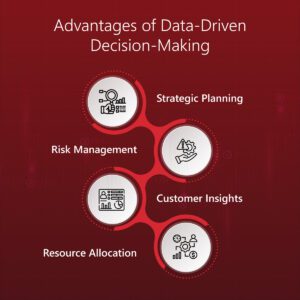
This shift brings several advantages of data-driven decision-making that can transform how a business operates:
- Strategic planning: Data helps in identifying patterns, trends and insights that can inform strategic planning and decision-making.
- Risk management: By analysing data, businesses can anticipate potential risks and take preventive measures.
- Customer insights: Data analysis helps in understanding customer preferences and behaviors, leading to better customer service and tailored products.
- Resource allocation: Data helps businesses allocate their resources more effectively, ensuring that investments are made where they are most likely to generate returns.
Business Analytics for Data-Driven Decision Making
Business analytics is an essential tool for data-driven decision-making. It involves the skills, technologies and practices for continuous iterative exploration and investigation of past business performance to gain insight and drive business planning. Business analytics for data-driven decision-making uses data and statistical methods to provide actionable insights for decision-makers.
For instance, a company might use business analytics to determine the most effective marketing strategies by analysing customer response rates or to optimise its supply chain by predicting the best times to order materials based on historical data.
Data-Driven Decision-Making in Business
In the context of business, data-driven decision-making involves several key processes and techniques:
Data collection: Gathering accurate and relevant data from various sources.
Data analysis: Using statistical tools and algorithms to make sense of the data collected.
Data interpretation: Translating analysis results into understandable and actionable business insights.
Decision implementation: Applying these insights to make real-world business decisions.
How Organisations Adapt to Data-driven Cultures
One of the significant challenges businesses face when transitioning to a data-driven approach is the cultural shift required. Organisations must foster a culture where data is at the heart of every operation and decision-making process. Here’s how companies can embrace this change effectively:
- Education and Training: Investing in education and training ensures that all levels of the organisation understand the importance of data and analytics. This can involve workshops, seminars and hands-on training sessions.
- Investing in Technology: Adopting the right tools and technologies is crucial for effective data analysis. This could range from advanced analytics software to more robust data storage solutions.
- Promoting Transparency: By making data accessible to all stakeholders, businesses can promote transparency and encourage more employees to engage in data-driven decision-making.
- Encouraging Collaboration: Data-driven cultures thrive on collaboration. Teams across different departments should be encouraged to share insights and data to foster a more integrated approach to problem-solving.
Overcoming Challenges in Data-Driven Decision Making
While the benefits are clear, the path to becoming a data-driven organisation is not without its challenges. Some of these challenges include:
- Data Quality and Quantity: Having too much data can be as problematic as having too little. Ensuring that data is relevant, accurate and of high quality is crucial.
- Resistance to Change: In many organisations, there can be resistance to change, especially from those who have relied on traditional decision-making processes.
- Privacy and Security: With the increasing amount of data, privacy and security concerns are more prominent. Organisations must ensure they comply with laws and regulations regarding data handling.
Addressing these challenges requires a strategic approach and the willingness to invest in both technology and human capital.
The Future of Data-Driven Decision Making
As technology continues to evolve, the potential for data-driven decision-making grows. The future is likely to see more advanced forms of analytics, such as artificial intelligence (AI) and machine learning (ML), which can predict patterns and make decisions in real time. Organisations that continue to invest in and prioritise data analytics will likely maintain a significant edge in the market.
PG Diploma in Business Analytics: A Pathway to Mastery
For those looking to build a career in this field, a PG Diploma in Business Analytics can be an excellent pathway. This program typically covers essential aspects such as statistical analysis, data management, business intelligence and advanced analytics. Through this diploma, students can acquire the necessary skills to effectively apply business analytics in real-world scenarios, thus making data-driven decision-making a key part of their professional toolkit.
Conclusion
To build a data-driven legacy, businesses need to evolve and adapt their strategies based on data insights continuously. This involves adopting new technologies and ensuring that the entire organisation understands and embraces the value of data-driven decision-making. A PG Diploma in Business Analytics could be your first step towards becoming a leader in this transformative environment. Top-ranked institutes like N. L. Dalmia, give your management dreams perfect wings. Furthermore, the institute’s PGDM program is approved by the All-India Council for Technical Education (AICTE) and AIU making it equivalent to an MBA in terms of governmental and academic recognition. This accreditation assures students that their education is rigorous and meets high standards.
The journey towards integrating data-driven decision-making in business is complex but rewarding. By committing to this path, businesses can ensure they remain competitive and relevant in an increasingly data-centric world. Remember, in the journey of data-driven decision-making, every bit of data counts towards crafting a smarter, more efficient business landscape.
Harnessing Data for Business Success
- April 16, 2025
- | MBA, MBA Advice
- | No Comments
In today’s fast-paced business landscape, data isn’t just a byproduct of operations, it’s the cornerstone of strategic decision-making. Leveraging data effectively can drive growth, enhance operational efficiency and give businesses a competitive edge. This comprehensive guide explores how business analytics can be a solution for business challenges, the role of analytics in decision-making and the benefits of a PG Diploma in Business Analytics.
Understanding the Power of Data
Data is often described as the new oil and for good reason. It’s a valuable resource that can yield powerful insights when refined and analysed. Businesses generate vast amounts of data daily, from customer transactions and social media interactions to supply chain logistics and employee productivity metrics. However, the actual value of data lies in how it’s harnessed and analysed to drive business success.
Business Analytics: A Solution for Business Challenges
Business analytics involves statistical analysis, predictive modeling and data mining techniques to analyse historical data and gain insights. This process helps businesses address various challenges:
- Spotting Market Trends: Businesses can anticipate shifts and adjust their strategies by analysing market trends. This proactive approach allows companies to stay ahead of competitors and seize emerging opportunities before they become mainstream.
- Enhancing Customer Experience: Understanding customer behaviour through data can improve products and services. Analytics helps identify customer preferences, pain points and buying patterns, enabling businesses to tailor their offerings to meet customer needs more effectively.
- Boosting Operational Efficiency: Data can identify inefficiencies in processes, guiding improvements that save time and resources. For instance, data analytics can streamline supply chain operations, reduce waste and optimise inventory management (SeedSpark Growth Services).
The Role of Analytics in Business Decision-Making
Analytics for business decision-making is about turning data into actionable insights. This involves several steps:
- Data Collection: Gather data from multiple sources to ensure a comprehensive view. The more diverse the data sources, the richer the insights. Sources include customer feedback, market research, social media and internal business processes.
- Data Analysis: Use tools like Microsoft Excel, Tableau and Python to analyse data and identify patterns. These tools help visualise data, making it easier to spot trends and correlations that inform strategic decisions.
- Data Interpretation: Experts in data science play a crucial role in interpreting complex data and translating it into strategic actions. Their expertise ensures that the insights derived from data are accurate and relevant to business goals (SeedSpark Blogs).
Effective Data Collection and Analysis
Effective data collection is the foundation of insightful decision-making. Here are some best practices:
- Set Clear Goals: Define what you want to achieve with your data. Having clear objectives helps focus data collection efforts on the most relevant information.
- Select Suitable Tools: Choose tools that fit your data collection needs. Tools like CRM systems, Google Analytics and survey platforms can facilitate efficient data collection.
- Ensure Data Quality: Focus on collecting accurate and relevant data. High-quality data is essential for reliable analysis and decision-making.
- Compliance: Adhere to data privacy laws to avoid legal issues. Ensuring compliance with regulations like GDPR and CCPA builds trust with customers and stakeholders (SeedSpark Blogs).
Transforming Data into Business Intelligence
Once data is collected, the next step is analysis. This transforms raw data into valuable business intelligence:
- Employ Analytical Tools: Utilise platforms like Microsoft Excel, Tableau, or R for analysis. These tools offer potent data manipulation, visualisation and statistical analysis features.
- Identify Patterns: Look for trends that can inform strategic decisions. Recognising patterns in data can reveal opportunities for innovation, cost savings and competitive advantage.
- Involve Experts: Data scientists and analysts can interpret complex data and provide actionable insights. Their expertise is crucial for understanding nuanced data trends and making informed decisions (SeedSpark Growth Services).
Strategic Application of Data Insights
The ultimate goal of data analysis is to inform business strategy. Here’s how to apply data insights effectively:
- Inform Your Strategy: Base business strategies on data-derived insights to ensure they are grounded in reality. Data-driven strategies are more likely to succeed because they are based on evidence rather than intuition.
- Track Outcomes: Regularly assess the impact of your data-driven strategy to ensure they are effective. Monitoring key performance indicators (KPIs) helps measure strategic initiatives’ success and identify areas for improvement.
- Be Adaptable: Adjust strategies based on new data insights to remain agile and responsive. The business environment constantly changes and staying flexible allows companies to pivot quickly in response to new information.
PG Diploma in Business Analytics: The Path to Mastery
A PG Diploma in Business Analytics offers comprehensive data collection, analysis and application training for those seeking to specialise in this field. This program equips professionals with the skills to transform data into actionable insights, driving business success. The curriculum typically covers statistical analysis, predictive modeling, data mining and analytical tools, preparing graduates to tackle real-world business challenges effectively.
A PG Diploma in Business Analytics is not just about learning technical skills; it’s about developing a strategic mindset. Students learn to apply analytics to solve complex business problems, make data-driven decisions and create value for their organisations. This holistic approach ensures that graduates are well-prepared to take on leadership roles in data analytics and drive business success.
Conclusion: Data as the Keystone of Business Strategy
In conclusion, harnessing data for business success is not just about having the right tools but also about having the right strategies. Businesses that master data collection, analysis and application can unlock their full potential, ensuring sustainable growth and a competitive edge.
At N. L. Dalmia Institute, the PG Diploma in Business Analytics is designed to equip professionals with the expertise needed to excel in this data-driven world. It is an excellent choice for those looking to enhance their career prospects in this dynamic field. Certified by the Association of Indian Universities (AIU) for the PGDM, PGDM – Finance and PGDM – Business Analytics program. It stands out as a perfect choice for your bright management career.
By integrating robust data strategies and advanced analytics, businesses can navigate the complexities of the modern market and drive sustained success. Embracing data-driven decision-making improves operational efficiency and fosters innovation and strategic growth.

Exploring the Real World of Finance: Insights from a PGDM Journey
- April 9, 2025
- | MBA, MBA Advice
- | No Comments
Opting for a specialisation in finance through a Postgraduate Diploma in Management (PGDM) is a decision that can truly transform your career. This program not only equips you with theoretical knowledge but also provides ample opportunities for practical learning. This article underscores the benefits of a PGDM in finance and underscores the importance of practical learning in preparing for successful careers in finance.
Why Choose PGDM in Finance?
So, why PGDM in finance? Finance is integral to the functioning of economies and influences all sectors, making it a critical area of study for those looking to make a significant impact. Opting for a PGDM in finance offers individuals the analytical tools to navigate complex financial landscapes. These tools enable them to perform data-driven analyses and develop strategies that effectively address organisational and economic challenges.
Additionally, the financial sector is characterised by the rapid evolution of new financial products, regulatory changes and market shifts that occur frequently. This creates a vibrant and dynamic career path that is intellectually stimulating and offers numerous opportunities for personal and professional growth.
The Importance of Practical Learning in Finance
Theoretical knowledge forms the bedrock of finance education, but applying this knowledge truly prepares students for the professional world. PGDM programs often integrate practical learning opportunities into their curricula, such as internships, simulations of market environments and project collaborations with industry partners.
These experiences are critical as they allow students to experience firsthand the day-to-day challenges and demands of finance roles. They learn to apply theoretical concepts in practical settings, honing their skills in real-time decision-making, problem-solving and strategic planning, all under the guidance of faculty and industry experts. This showcases the importance of practical learning.
Building a Network in Finance
In finance, professional networks can be as valuable as academic knowledge. These networks provide insights, opportunities and strategic partnerships often crucial to career advancement. PGDM programs facilitate networking by organising numerous industry engagement activities, such as seminars with finance experts, alumni talks and professional workshops.
These events allow students to connect with seasoned professionals and industry leaders who can offer mentorship and possibly influence their career trajectories. Moreover, a robust alumni network can be an invaluable resource, offering guidance and opening doors to opportunities in prestigious financial institutions. This is a huge benefit when considering why you choose finance in PGDM.
Leveraging Technology in Finance
The intersection of finance and technology has led to the emergence of fintech, a sector that continues to grow exponentially. Understanding and mastering financial technologies is now a requisite skill in finance. PGDM programs equip students with knowledge of the latest financial tools and platforms, such as blockchain for secure transactions, machine learning for predictive analytics and big data tools for comprehensive market analysis. These technologies enable finance professionals to enhance the accuracy and efficiency of their work, leading to better decision-making processes and innovative financial solutions.
Ethical Considerations in Finance
Finance professionals often face ethical dilemmas, from conflicts of interest to corporate governance and accountability issues. PGDM programs address these challenges by incorporating ethics into their curriculum, focusing on real-world case studies and simulations that help students navigate complex ethical landscapes. This training helps future financiers develop a keen sense of responsibility and integrity, ensuring they can uphold the trust placed in them by clients and the public and adhere to regulatory standards and ethical norms.
The Global Perspective
As financial markets are globally interconnected, understanding international finance is crucial for any finance professional. This includes studying market mechanisms, currency fluctuations, cross-border investment dynamics and global economic policies. If you’re wondering why you choose Finance in PGDM, these programs offer specialised courses that cover these topics, preparing students to operate effectively in international settings. This global perspective is essential for professionals aiming to work in multinational corporations or those interested in international market trends.
Preparing for Future Challenges
Global economic conditions, policy changes and technological advancements continuously influence the finance industry’s landscape. Finance professionals must be adaptable and committed to lifelong learning to stay relevant. PGDM programs foster a mindset geared towards innovation and continuous improvement. They encourage students to stay updated with the latest industry trends and to develop a proactive approach to learning and personal development.
Real-World Applications and Career Preparation
Any PGDM program aims to bridge the gap between theoretical knowledge and its application in real-world scenarios. This is achieved through a curriculum emphasising case studies, live projects and internships. These components allow students to translate their classroom learning into effective practices in real business contexts, thus preparing them comprehensively for their future roles in finance. Internships, in particular, are crucial as they provide a platform for immersive learning and help students build confidence in their skills while establishing important industry connections.
The Role of N. L. Dalmia Institute of Management Studies and Research
N. L. Dalmia Institute of Management Studies and Research stands out for its commitment to providing an education combining rigorous academic coursework and extensive practical experiences. The Institute’s PGDM in finance is designed to reflect the latest industry demands and trends, ensuring its students are well-prepared for today’s and tomorrow’s challenges. By focusing on theoretical depth and practical application, the institute aims to produce graduates who are knowledgeable and capable of implementing their knowledge effectively in the Global Finance arena.
Conclusion
To answer the question, ‘Why PGDM in Finance,’ a PGDM in finance is not just an academic credential but a comprehensive training ground for the next generation of finance professionals. It equips students with the necessary knowledge, skills and ethical grounding to excel in finance. Institutes like N. L. Dalmia play a crucial role in shaping these professionals, who are prepared not only to meet the current demands of their professions but also to innovate and lead in their fields.
The Institute hosts South Asia’s largest standalone Bloomberg lab with 24 terminals.They are recognised as The 1st Bloomberg Experiential Learning Partner (ELP) Program in India.
For anyone considering a career in finance, a PGDM offers a solid foundation and a pathway to achieving significant impacts in business and finance.
The Strategic Edge of Specialising in HRM
- April 1, 2025
- | MBA, MBA Advice
- | No Comments
In today’s dynamic business landscape, specialising in Human Resource Management (HRM) offers a strategic edge for professionals looking to impact their organisations significantly. With the ever-evolving nature of work, HR challenges and solutions are at the forefront of creating resilient and thriving workplaces. Let’s explore why studying HRM, understanding workforce management and pursuing a PGDM in HRM can be a game-changer for your career.
Understanding HRM: More Than Just Hiring
Human Resource Management is about more than recruiting and onboarding new employees. It’s a multifaceted discipline encompassing various activities designed to optimise an organisation’s workforce. From managing employee relations and ensuring compliance with labour laws to developing strategic initiatives for talent acquisition and retention, HRM plays a crucial role in driving business success.
HR Challenges and Solutions
Today’s HR professionals face a myriad of challenges. These include attracting and retaining top talent, fostering a diverse and inclusive workplace, managing remote teams and ensuring employee well-being. Addressing these issues requires innovative solutions and a proactive approach.
For instance, creating a continuous feedback culture can enhance employee engagement and performance. Regular recognition of employees’ efforts can foster a learning culture and encourage skill development. Additionally, implementing comprehensive diversity training programs can help build empathy and understanding across diverse groups, promoting a more inclusive workplace (Whatfix) (Workhuman).
What is Workforce Management?
Workforce management is a key component of HRM that involves optimising the productivity of an organisation’s employees. This includes planning, forecasting, scheduling and tracking employee performance to ensure that the right people are in the right roles at the right time. Effective workforce management can lead to improved efficiency, reduced labour costs and enhanced employee satisfaction (Oreed).
The Importance of Upskilling and Reskilling
With the rapid pace of technological advancements, upskilling and reskilling have become critical for maintaining a competitive edge. According to recent studies, over 50% of employees will need significant upskilling to meet the evolving demands of their roles. HR professionals must proactively address these needs, bridging the skills gap and empowering employees to succeed in a digitally transformed work environment (Oreed).
Why Study HRM?
Specialising in HRM provides a comprehensive understanding of how to manage and develop an organisation’s most valuable asset—its people. Here are a few compelling reasons to consider studying HRM:
- Strategic Influence: HR professionals are strategic partners in shaping an organisation’s future. By aligning HR strategies with business goals, they can significantly improve productivity and employee satisfaction.
- Versatility and Growth: A career in HRM offers versatility, with opportunities to work in various industries and sectors. As organisations increasingly recognise the importance of effective HR practices, the demand for skilled HR professionals grows.
- Impactful Work: HR professionals have the unique opportunity to impact the lives of employees positively. From fostering a supportive work environment to promoting diversity and inclusion, HRM allows you to contribute to creating a better workplace for all.
Pursuing a PGDM in HRM
A Post Graduate Diploma in Management (PGDM) in HRM is an excellent way to gain specialised knowledge and skills in this field. Programs like those offered by N. L. Dalmia Institute of Management Studies and Research provide a comprehensive curriculum that covers essential HRM topics, including talent management, employee relations, organisational behaviour and strategic HRM.
Benefits of a PGDM in HRM
- Advanced Knowledge: Gain in-depth knowledge of advanced HRM concepts and practices, preparing you for leadership roles in HR.
- Practical Skills: Develop practical skills through real-world case studies, internships and industry projects, ensuring you are job-ready upon graduation.
- Networking Opportunities: Connect with industry professionals, alums and peers, building a network that can support your career growth.
Conclusion: Your Path to HR Leadership
Specialising in HRM offers a strategic advantage in today’s competitive job market. Whether you’re addressing complex HR challenges and solutions or exploring what workforce management entails, a deep understanding of HRM principles is invaluable. Pursuing a PGDM in HRM from a reputable institution like N. L. Dalmia can equip you with the skills and knowledge needed to excel in this dynamic field.
In conclusion, HRM is more than just a career, it’s a strategic role that shapes organisations’ futures. By investing in your education and gaining expertise in HRM, you can become a vital player in creating workplaces that thrive in the face of change.
What Are Career Opportunities in Finance?
- March 25, 2025
- | MBA, MBA Advice
- | No Comments
The world of finance is expansive and offers a multitude of career paths that are both rewarding and dynamic. For those armed with a Post Graduate Diploma in Management (PGDM) in Finance, the opportunities are even more promising, thanks to the specialised training and industry-aligned curriculum provided by top institutions. This article aims to shed light on the comprehensive range of career opportunities in finance, focusing on how a PGDM in finance can serve as a stepping stone to a thriving career in the financial sector.
The Value of a PG Diploma in Finance
So, why PGDM in Finance?
A PGDM in Finance is not just another academic credential; it’s a unique gateway to numerous high-demand roles in the finance sector. This specialised program equips students with a deep understanding of financial management, economics and investment strategies, intertwined with essential soft skills like leadership, communication and analytical thinking. These competencies are crucial as they allow graduates to navigate the complexities of the financial markets and to contribute effectively from day one.
Career Opportunities in the Finance Sector for PGDM Graduates
A Post Graduate Diploma in Management (PGDM) in Finance opens doors to a plethora of exciting and rewarding career paths within the finance sector. This advanced educational credential is highly valued across various industries, making it a strategic choice for those looking to enhance their professional prospects in finance. Here, we explore the breadth of career opportunities in the finance sector available for PGDM graduates, detailing specific roles and the unique value they bring to each.
Banking and Financial Services
Banking remains a cornerstone of the finance sector, offering multiple roles that cater to both retail and corporate services. Graduates can find opportunities as:
- Retail Bank Managers: Overseeing branch operations, improving customer service and managing staff.
- Credit Analysts: Assessing credit data and financial statements of individuals or companies to determine the risk involved in extending credit or lending money.
- Wealth Managers: Advising clients on investments, estate planning and overall wealth management.
Corporate banking further provides roles such as loan officers or corporate account managers who handle large business accounts and loans. They work closely with clients to develop relationships and tailor banking services to corporate needs.
Investment Banking
PGDM graduates with a penchant for high-stakes environments may gravitate towards investment banking, where they can play pivotal roles in:
- Mergers and Acquisitions (M&A): Advising companies on acquisitions, mergers and other business restructurings.
- Underwriting: Helping companies raise capital through issuing stocks or bonds.
- Financial Analysts: Conducting industry research, creating financial models and developing investment strategies.
Financial Planning and Advisory Services
Another rewarding path is financial planning, where professionals help individuals manage their finances across different stages of life. Career opportunities in finance include:
- Financial Advisors: Offering personalised advice on investments, savings and retirement planning.
- Estate Planners: Assisting clients in planning their estate and the allocation of assets in preparation for retirement or inheritance planning.
- Insurance Advisors: Helping clients choose the right insurance products to protect against risks.
Corporate Finance
Within corporate entities, you can build a career after PGDM in Finance in strategic roles such as:
- Chief Financial Officers (CFOs): Overseeing the financial operations of a company, including strategic planning, risk management and financial reporting.
- Financial Controllers: Managing accounting and financial reporting functions, ensuring compliance with regulatory requirements.
- Treasury Managers: Responsible for the company’s budgets, investments and liquidity, including managing banking relationships and financial risks.
Fintech and Emerging Technologies
The fintech sector offers innovative roles at the intersection of finance and technology, with opportunities such as:
- Blockchain Developer: Developing and implementing digital solutions using blockchain technology.
- Fintech Analyst: Analysing market trends to create new fintech products or improve existing ones.
- Digital Payment Specialist: Focusing on electronic payment systems and digital currencies.
Sustainability and Green Finance
With a growing emphasis on sustainability, green finance has emerged as a vital area, with roles like these available to build a career after PGDM in Finance:
- Sustainable Investment Analysts: Focusing on investments that meet sustainability criteria.
- Environmental Risk Consultants: Assessing and mitigating financial risks related to environmental factors.
- Green Portfolio Managers: Managing portfolios that invest in environmentally sustainable enterprises.
How N. L. Dalmia Is Preparing Students For The Professional Finance World?
At N. L. Dalmia, we believe that our role is not just to educate but to empower. Our PGDM in Finance program is crafted to bridge the gap between academic theory and industry practice. We offer state-of-the-art facilities, experienced faculty and strong industry connections, all of which prepare our students to excel in the competitive finance sector.
Our curriculum for the PG Diploma in Finance course is continuously updated to keep pace with global financial trends and technologies, ensuring that our graduates are not just participants but leaders in their respective fields. Students get additional certifications in
– Bloomberg Market Concept
– Bloomberg Analyst
– Coursera Courses
We also provide comprehensive career support services, from internships with top financial firms to placement assistance, helping our students launch successful careers in finance.
At N. L. Dalmia, the 2nd Best B-School in Mumbai by Times of India, we understand that finance is an ever-evolving field. That’s why we commit to lifelong learning and continuous professional development for our students. Our alumni network and continuous education programs ensure that our graduates stay at the forefront of industry changes and advancements long after they’ve completed their degrees. This ongoing support system not only helps in career advancement but also in adapting to new challenges and technologies in the finance sector.
Conclusion
The scope for career opportunities in finance after a PGDM is broad and full of potential. With a solid foundation in finance, graduates can explore traditional roles or branch out into newer areas like fintech and sustainable finance. The industry’s constant evolution offers endless opportunities for those who are prepared to take them. At , our goal is to provide our students with the education, skills and support they need to succeed in whatever finance path they choose, making them not just participants in the finance world but leaders shaping its future.

The Role of Technology in Global Business Through Perspectives from a Global MBA Program
- March 21, 2025
- | MBA, MBA Advice
- | No Comments
Technology plays a pivotal role in shaping global markets. As businesses expand beyond their domestic borders, the necessity to integrate technology into their operations becomes increasingly significant. This blog delves into how technology is influencing globalisation with reference to business continuity, transforming international markets and redefining international marketing strategies. We’ll also explore the implications of global digital transformation and discuss the growth of the international business environment through the lens of a Global MBA program.
Technology and Globalisation: Enhancing Business Continuity
The role of technology in globalisation, especially concerning business continuity, cannot be overstated. In an era where the unexpected can become the norm be it a pandemic, economic downturn, or geopolitical instability technology provides the tools businesses need to maintain operations seamlessly. Cloud computing, for instance, allows companies to access data and systems from anywhere in the world, ensuring that their operations can continue uninterrupted regardless of physical office closures or disruptions.
Telecommunication advancements such as video conferencing and real-time messaging have also played crucial roles. They enable teams spread across different continents to collaborate effectively as if they were in the same room. This not only supports continuity but also enhances the efficiency of global operations.
Impact of Technological Change on Global Markets
The impact of technological change on global markets is profound and far-reaching. Innovations such as blockchain and artificial intelligence (AI) are not just buzzwords but are reshaping industries. Blockchain technology, for example, has revolutionised supply chain management by providing transparent and tamper-proof systems. This technology fosters trust in global trade, which is particularly important for markets involving multiple jurisdictions with varying regulations.
Similarly, AI is transforming customer service and market analysis. With AI, businesses can provide personalised experiences to customers across different countries, adapting to cultural nuances and preferences without extensive human intervention.
Technological Factors in International Marketing
When considering technological factors in international marketing, one must examine how digital platforms have democratised market entry for businesses of all sizes. Social media and e-commerce platforms enable even small enterprises to reach a global audience with minimal cost. Digital marketing tools powered by big data allow businesses to target their marketing efforts more effectively, ensuring they reach the right audience with the right message at the right time.
Moreover, technology enables businesses to conduct extensive market research without needing physical presence. Companies can gain insights into new markets faster and more accurately through online surveys, social media engagement and digital footprints.
Global Digital Transformation
The global digital transformation is reshaping how businesses operate worldwide. This transformation is about adopting new technologies and changing organisational cultures and processes to leverage these technologies effectively. It involves integrating digital technology into all business areas, fundamentally changing how they operate and deliver value to customers.
This digital shift is evident in how companies prioritise digital security, cloud services and customer-centric platforms that can handle the complexities of international business.
Growth of the International Business Environment
The growth of the international business environment has been significantly accelerated by technology. Today, companies can manage global supply chains, oversee international financial transactions and maintain regulatory compliance across different countries all thanks to technological advancements. Furthermore, the ability to quickly adapt to market changes and consumer needs globally is a direct benefit of this technological integration.
Understanding Consumer Behavior through Technology
Technology has revolutionised the way businesses understand and interact with consumers globally. Advanced analytics and big data have enabled companies to analyse vast amounts of information about consumer behaviors, preferences and trends across different regions. Tools like customer relationship management (CRM) systems and predictive analytics are used extensively to tailor products and services to meet the unique needs of diverse markets. This level of understanding helps businesses enhance customer satisfaction and loyalty, ultimately driving growth.
Data-Driven Decision-Making in International Business
In today’s digital age, making informed decisions is key to international business success. With the advent of big data analytics and machine learning technologies, businesses can now process and analyse data from multiple sources in real-time. This capability allows for more precise decision-making, reducing the risks of entering new markets or launching new products globally. For instance, by analysing market trends and consumer feedback, companies can adjust their strategies promptly to capitalise on opportunities or mitigate potential threats.
Cyber Security: Safeguarding Global Operations
As businesses expand their digital footprint globally, cyber security becomes paramount. Protecting sensitive information and maintaining the integrity of digital operations are critical as cyber threats grow more sophisticated. Companies must invest in robust security systems and protocols to safeguard their data and ensure the trust of their customers and partners worldwide. Furthermore, educating employees about cyber risks and preventive practices is crucial in building a resilient organisation.
Integrating Sustainability with Technology in Global Markets
Another vital aspect of technology in global business is its role in promoting sustainability. Companies increasingly use technology to reduce their environmental footprint and implement sustainable practices across their international operations. Digital tools optimise resource use, reduce waste and improve efficiency. For example, IoT (Internet of Things) devices can monitor energy usage across facilities, helping companies implement more sustainable energy practices.
Preparing for Future Challenges and Opportunities
As we look to the future, the role of technology in global business will continue to evolve. Emerging technologies like the Internet of Things (IoT), augmented reality (AR) and virtual reality (VR) are set to redefine the international business landscape. These technologies will offer new ways for businesses to interact with customers, manage operations and even train employees. Staying ahead in a technologically advanced business environment will require continuous learning and adaptation.
Global MBA Program: Preparing Leaders for a Technologically Driven World
A Global MBA program plays a crucial role in understanding these dynamics. Such programs are designed to equip future business leaders with the knowledge and skills to navigate the complex landscape of international business influenced by rapid technological changes.
For example, we offer a comprehensive Global MBA program at N. L. Dalmia Institute of Management Studies and Research. This program not only focuses on core business principles but also integrates key aspects of technology in global business strategies. It prepares students to be leaders in a digital world, emphasising practical, tech-driven business applications in a global context.
Awarded as the 2nd Best B School in Mumbai by Times of India, N. L. Dalmia has aced the management studies landscape. It’s not just about having access to data but about knowing how to use it effectively.
Conclusion
As the world continues to grow more interconnected, the intersection of technology and international business becomes increasingly complex and essential. From enhancing business continuity to transforming global market operations and marketing strategies, technology’s role is indelible. Understanding these elements through advanced educational programs like a Global MBA can provide invaluable insights and tools for aspiring global business leaders.
In this age of global digital transformation and the expansion of the international business environment, staying ahead means staying connected technologically and globally.

Demystifying Financial Management and Understanding the Role of PGDM in Finance
- March 19, 2025
- | MBA, MBA Advice
- | No Comments
Financial management can often seem like a maze of numbers and jargon to the uninitiated, leaving many wondering why financial management is important in business. However, when simplified, it’s all about ensuring that a company’s financial resources are efficiently used to achieve its objectives. This blog aims to demystify financial management and explore why studying financial management, specifically through a Postgraduate Diploma in Management (PGDM) in Finance, can be a game-changer for those looking to excel in the business world.
Why Financial Management Is Important in Business?
At its core, financial management is crucial for several reasons. It helps businesses manage their resources, maximise profitability and plan for long-term sustainability. Without effective financial management, businesses risk making poor strategic decisions, running into cash flow problems and ultimately failing to achieve their goals. This underscores why financial management is important in business it’s the backbone that supports operational efficiency and strategic growth.
An Overview of Financial Management
Studying financial management equips individuals with the knowledge and skills to analyse financial statements, understand market trends, make forecasts and develop strategies to increase profitability. It teaches one how to take complex financial management decisions with confidence and precision, an indispensable skill in today’s fast-paced business environment. This leads us to explore why studying financial management not only prepares you for the complexities in decision-making but also opens up a plethora of career opportunities in the finance sector.
Why PGDM in Finance?
So, why study financial management? Choosing to specialise in finance through a PGDM program offers an intensive curriculum designed to deepen financial knowledge and sharpen analytical skills. A PGDM in Finance is not just about understanding numbers but learning how to apply financial principles in a real-world context to make complex financial management decisions effectively. It covers a broad range of subjects, from corporate finance and investment banking to risk management and financial planning, making it a comprehensive choice for those looking to make their mark in the finance industry.
PGDM Finance Subjects
The PGDM in finance is structured to cover both the theoretical and practical aspects of financial management. Key subjects often include Financial Reporting and Analysis, Corporate Finance, Investment Analysis and Portfolio Management, International Finance and Strategic Financial Management, among others. These subjects are carefully chosen to ensure that students are well-versed in making informed financial decisions, understand the complexity of decision-making and are equipped to handle the challenges of the financial sector.
N. L. Dalmia’s PGDM in Finance Program
At N. L. Dalmia Institute of Management Studies and Research, we understand the critical role of financial management in business success and the growing need for skilled finance professionals who can navigate the complexities of the financial world. Our PGDM in Finance program is designed to meet this demand by providing a rigorous curriculum that blends theoretical knowledge with practical application.
Emphasising Real-World Application
We believe in preparing our students to make complex financial management decisions through a curriculum that encourages practical learning. Our program integrates case studies, financial modeling workshops and simulation games, ensuring that students can apply what they learn in real-world scenarios. This approach helps demystify the complexity of decision-making, making our graduates highly sought after in the finance industry.
Comprehensive Curriculum
Our PGDM in Finance covers a wide range of subjects that are essential for a successful career in finance. From understanding the basics of financial accounting to mastering investment strategies and exploring the nuances of international finance, our curriculum is designed to cover all bases. This comprehensive approach ensures that our students are well-prepared to tackle the challenges of the financial sector, equipped with a deep understanding of financial management principles and the ability to apply them effectively.
Industry-Ready Graduates
The ultimate goal of our PGDM in Finance program is to produce graduates who are not only academically proficient but also industry-ready. We achieve this by focusing on skill development, such as analytical thinking and strategic planning, which are crucial for making complex financial management decisions. Our strong industry connections and dedicated placement cell ensure that our students have ample opportunities to engage with the business world, gain valuable experience and embark on rewarding careers in finance.
Here are some of the list of the accreditations:
> Certified by the Association of Indian Universities (AIU) for the PGDM, PGDM – Finance and PGDM – Business Analytics program.
> Accredited by All India Council of Technical Education (AICTE)
> Accredited by the National Assessment and Accreditation Council (NAAC) in 2023 with a Grade ‘A+’ in the second cycle
> Accredited by South Asian Quality Assurance System (SAQS) International Accreditation in 2023 for five years.
> Accredited by the National Board of Accreditation (NBA) for the PGDM program in 2022 for three years.
Why Choose N. L. Dalmia’s PGDM in Finance ?
Choosing our PGDM in Finance program means opting for an institution that values excellence in financial education. We are committed to providing our students with a learning environment that fosters growth, innovation and success. The Institute hosts Mumbai’s 1st Bloomberg Lab with 24 Terminals, which is the Largest Standalone Lab in South Asia. They are recognised as The 1st Bloomberg Experiential Learning Partner (ELP) Program in India. By joining us, you’re not just enrolling in a program; you’re becoming part of a community that will support and guide you through the complexities of the finance sector, ensuring that you’re well-prepared to make a significant impact in the world of business.
Conclusion
Financial management is a critical component of business success and understanding how to navigate its complexities can set you apart in the competitive business landscape. A PGDM in Finance offers an in-depth exploration of financial principles and their practical applications, preparing students for the challenges of the finance industry. At N. L. Dalmia, as the 2nd Best B – School in Mumbai – Times of India, our PGDM in Finance program is designed to equip you with the skills needed to make complex financial management decisions and thrive in your career. Whether you’re wondering why you should study financial management or pursue a PGDM in finance, the answer lies in the vast opportunities and the ability to influence business growth and strategic decision-making in the global marketplace.

Specialised Skills: What’s the key to Unlocking India’s Economic Potential?
- March 7, 2025
- | MBA, MBA Advice
- | No Comments
Possessing a unique set of skills can significantly enhance one’s career prospects. As industries evolve and new sectors emerge, the demand for specialised skills is more pronounced than ever. This is particularly true in India, where economic growth is both a promise and a challenge.
One effective pathway to acquiring these essential capabilities is through a Post Graduate Diploma in Management (PGDM). This educational choice sharpens individual competencies and prepares aspirants to play pivotal roles in propelling the country’s economic ambitions forward.
The Importance of Skill Development for Inclusive and Sustainable Economic Growth
Skill development is crucial for fostering inclusive and sustainable economic growth. As India strides towards becoming a global powerhouse, the need for a versatile, adaptable and technically proficient workforce cannot be overstated. Skills not only empower individuals but also bolster the economy’s overall productivity, making education and skill development for faster economic growth an imperative strategy.
The modern job market is increasingly segmented, with specific industries requiring niche skills that can often only be acquired through focused training and education. Sectors such as technology, finance, healthcare and management consultancies seek candidates who are academically proficient and equipped with industry-specific knowledge that can contribute to innovative and strategic business solutions.
PGDM Courses: Tailoring Education to Meet Industry Demands
A PGDM course is meticulously designed to bridge the gap between theoretical knowledge and real-world application. These courses are typically framed to instill deep industry-specific knowledge and practical skills immediately applicable in the workplace. For students, a PGDM is not just a degree but a strategic tool that enhances their employability and equips them to address complex challenges in the corporate world.
N. L. Dalmia’s PGDM course plays a critical role in shaping the educational landscape in India. These programs are continually updated to reflect the latest industry trends and demands, ensuring that students are learning what is currently relevant and in demand.
N. L. Dalmia’s Commitment to Nurturing Future Leaders
At N. L. Dalmia Institute, we are dedicated to sculpting the future leaders of India. Our PGDM programs are more than just academic courses, they are transformative experiences that mold students into strategic thinkers and problem-solvers. We understand that the landscape of industry demands is ever-changing and to keep pace, our curriculum is constantly evolving.
Our PGDM courses are designed to meet the dual needs of skill development for inclusive and sustainable economic growth. We provide our students with a robust foundation in management theory, reinforced with practical insights and real-world project experience. This hands-on approach ensures that our graduates are ready for the job market and poised to transform it.
We offer a range of specialisations that cater to various industry sectors. Whether it’s finance, marketing, operations, or human resources, our courses are tailored to meet the specific needs of these diverse fields. Our faculty comprises seasoned professionals and academicians with rich industry experience and a deep understanding of global business trends.
The Strategic Advantage of Pursuing a PGDM
Choosing to pursue a PGDM can significantly alter a student’s career trajectory. The course offers an in-depth understanding of the business world and the opportunity to specialise in a particular field. This dual advantage equips students with a comprehensive skill set that is highly valued in the job market.
Moreover, a PGDM program often includes internships and live projects that provide practical exposure and networking opportunities. These experiences are invaluable as they allow students to apply their learning in real-world scenarios, further enhancing their understanding and skills.
Driving Economic Growth through Education and Skill Development
The role of education in driving economic growth must be considered. By focusing on education and skill development for faster economic growth, India can ensure that its workforce is not only prepared for today’s jobs but also capable of innovating for tomorrow’s jobs. Institutions like N. L. Dalmia are at the forefront of this initiative, providing cutting-edge, relevant education that aligns with global standards and local needs.
Enhancing Employability through Specialised Skill Development
In the context of India’s dynamic job market, specialised skills are not merely an asset; they are a necessity. A PGDM provides a well-rounded education but stands out by focusing on specialised skills that increase employability directly. This specialisation is crucial as it aligns with the needs of employers who are increasingly looking for candidates who can hit the ground running.
The curriculum often includes advanced analytics, digital marketing strategies and project management, all taught through practical, real-world applications. This hands-on approach ensures that graduates are ready to meet the challenges of the workplace head-on.
Entrepreneurship and Innovation in PGDM Curriculums
Entrepreneurship drives growth, creates jobs and fosters innovation, all essential for the sustained economic development of a country like India. PGDM programs encourage entrepreneurial thinking by integrating subjects that teach students how to start, manage and scale businesses. Courses in entrepreneurship within PGDM programs are designed to inspire students to think creatively, identify and solve problems innovatively and understand the risk management involved in new ventures. This focus helps nurture the next generation of business leaders who can contribute to skill development for inclusive and sustainable economic growth.
The Role of Technology in Modern Education
Technology integration in PGDM courses is another critical aspect that enhances the learning experience and ensures cutting-edge education. From virtual simulations and AI-powered analytics tools to online learning modules that students can access anytime, technology makes learning more flexible and interactive. This integration prepares students for a digital economy where tech-savviness is as crucial as management fundamentals.
Global Exposure and Networking Opportunities
International exposure is another significant benefit of pursuing a PGDM. Many institutes offer exchange programs, international internships and seminars that expose students to global markets, cultures and business practices. Such experiences enrich the students’ understanding and broaden their perspectives, making them valuable assets to multinational corporations and businesses looking to expand globally. Networking opportunities during these programs also allow students to form connections crucial for their professional growth.
Sustainability and Social Responsibility in Management Education
As global concerns about sustainability and corporate responsibility grow, management education has begun to reflect these issues. PGDM courses now often include modules on sustainable development, ethical management practices and corporate social responsibility (CSR).
Teaching students about the impact of business on the environment and society prepares them to make decisions that consider not just economic outcomes but also social and environmental consequences. This education is vital for developing leaders who will drive the future of business in ethical and environmentally sustainable ways.
Conclusion
A PGDM is not just an academic degree; it’s a gateway to advanced career opportunities and a tool for profound personal and professional transformation. With its emphasis on specialised skills, entrepreneurship, technology integration, global exposure and sustainability, a PGDM program prepares students to be not only participants in India’s growth story but active contributors to it. At N. L. Dalmia institute, we equip students with the necessary skills and knowledge to navigate and succeed in a complex global economic landscape.
Here are some of the accreditations and rankings of N. L. Dalmia:
> Certified by the Association of Indian Universities (AIU) for the PGDM, PGDM – Finance and PGDM – Business Analytics programme.
> Accredited by All India Council of Technical Education (AICTE)
> Accredited by the National Assessment and Accreditation Council (NAAC) in 2023 with a Grade ‘A+’ in the second cycle
> Accredited by South Asian Quality Assurance System (SAQS) International Accreditation in 2023 for five years.> Accredited by the National Board of Accreditation (NBA) for the PGDM program in 2022 for three years.
As India continues to assert its position on the world stage, the role of advanced management education in driving education and skill development for faster economic growth becomes all the more pivotal.
From Data to Decisions- Understanding the Career Path in Business Analytics
- March 7, 2025
- | MBA, MBA Advice
- | No Comments
In the digital era, data is akin to gold. However, this ‘gold’ is only useful if a skilled miner can extract, refine and transform it into something of value. This is where business analytics comes into play, bridging raw data and strategic decisions. If you’re intrigued by the prospect of deciphering the language of data to drive business success, then a career in business analytics is your calling. This blog will navigate the intricacies of the business analytics career path, highlight the business analytics career opportunities and delve into how to start a business analytics career.
The Business Analytics Career Path
The business analytics career path is as dynamic as it is rewarding, offering many opportunities to those willing to dive into the depths of data. At its core, business analytics involves analysing data to make informed business decisions. This could mean anything from predicting market trends and understanding consumer behavior to optimising operational processes. The beauty of a career in business analytics is its relevance across industries – be it finance, healthcare, retail, or technology, the demand for skilled analysts is omnipresent. Embarking on a business analytics career path is akin to becoming a navigator in the vast ocean of data, guiding organisations to the shores of success through informed decision-making. This journey, while challenging, is replete with opportunities for growth, innovation and impact.
The initial steps into business analytics involve mastering technical skills and tools, but as one progresses, the path evolves. Real mastery comes from understanding the business context, asking the right questions and weaving narratives from data that resonate with stakeholders. This evolution from technical expert to strategic advisor is a testament to the depth and breadth of the business analytics field.
A career in business analytics is open to many industries or roles. Whether it’s enhancing customer experiences in retail, optimising supply chains in manufacturing, or innovating product offerings in technology, the applications are as diverse as they are transformative. This diversity enriches the professional experience and ensures that career opportunities in business analytics are abundant and resilient to economic shifts.
Moreover, as the importance of ethical data usage grows, business analysts increasingly become data and trust custodians. This adds a layer of responsibility and influence to the role, as decisions and insights have the power to shape business strategies.
Thus, the business analytics career path is about navigating through data and charting the course for ethical, impactful and innovative business practices. It’s a journey of continuous learning, where each dataset presents a new puzzle and every insight contributes to a larger story of progress and transformation.
How to Start a Career in Business Analytics?
Starting a career in business analytics requires a curious mind and a foundational understanding of data analysis tools and methodologies. Here’s a simplified roadmap:
- Educational Foundation: Begin with a strong educational foundation in fields related to business, statistics, or computer science. A specialised course, like a PGDM in Business Analytics, can provide a comprehensive understanding of the field’s theoretical and practical aspects.
- Skill Development: Get comfortable with data analytics tools (think Excel, SQL, R, or Python) and visualisation software (like Tableau or Power BI). These skills are non-negotiable in the analytics arsenal.
- Real-world Experience: Apply your knowledge through internships or projects. Real-world data problems refine your skills and increase your employability.
- Networking: Connect with professionals in the field through online forums, networking events, or professional associations. Insights from experienced professionals can provide guidance and open doors to opportunities.
- Continuous Learning: The field of business analytics is ever-evolving. Staying updated with the latest trends and technologies is key to advancing your career.
Business Analytics Career Opportunities
The business analytics career scope is vast, with roles ranging from Data Analysts and Business Intelligence Analysts to Data Scientists and Analytics Consultants. These professionals translate data into insights that can guide strategic business decisions. With the explosion of data in recent years, the demand for analytics professionals has skyrocketed, making it a lucrative career choice. Organisations worldwide recognise the value of data-driven decision-making, leading to many career opportunities in business analytics. The ability to analyse complex datasets makes you an asset to employers and opens up avenues for consulting roles and entrepreneurial ventures in the analytics space.
Business Analytics Career Scope
The scope of a career in business analytics extends beyond traditional roles. Advanced analytics and machine learning are opening new frontiers for innovation in product development, customer experience and operational efficiency. The career trajectory in business analytics can lead to senior positions like Chief Data Officer or Analytics Director, where one oversees the strategic use of data across the organisation. Moreover, the skills acquired in a business analytics role are highly transferable. This flexibility allows professionals to pivot across industries or specialise in niches like marketing, financial, or supply chain analytics, further broadening the business analytics career scope.
N. L. Dalmia’s PGDM in Business Analytics Course
When discussing how to start a career in business analytics, the role of specialised education cannot be overstated. At N. L. Dalmia Institute of Management Studies and Research, we take pride in our Post Graduate Diploma in Management (PGDM) in Business Analytics. This program epitomises our commitment to bridging the gap between academic theory and the practical skills essential for the industry.
This course encompasses various subjects, including data management, advanced analytics, strategic decision-making and leadership, all meticulously curated to reflect the latest industry trends and technologies. Our goal is to ensure our graduates are not just educated but are truly ready to meet the demands of the industry head-on.
What distinguishes our PGDM in Business Analytics is its unwavering focus on real-world applications. Our students comprehensively understand the business analytics landscape by engaging in hands-on projects, internships and interactions with industry veterans. This approach is complemented by our state-of-the-art facilities and a faculty of seasoned professionals and distinguished academics, all dedicated to fostering an environment that encourages learning, innovation and excellence.
Graduates of this program find themselves well-equipped to navigate the complexities of the data-driven world, with alumni holding esteemed positions in various industries. The PGDM in business analytics from N. L. Dalmia opens doors to many business analytics career opportunities and lays the foundation for lifelong learning and growth in this dynamic field. The university has been ranked as the 2nd Best B-School in Mumbai by the Times of India. With over 800+ students on campus every year and 300+ corporate placement partners, N. L. Dalmia boasts credibility like none other.
Conclusion
Embarking on a career in business analytics is a journey of constant learning and adaptation. The field offers a unique blend of challenges and rewards, making it an attractive option for those fascinated by data and its impact on business strategies. Remember, the key to a successful career in business analytics lies in a solid educational foundation, skill development, practical experience and continuous learning. At N. L. Dalmia, we offer specialised courses like the PGDM in Business Analytics, which play a pivotal role in preparing the next generation of analytics professionals. The Institute is certified by the Association of Indian Universities (AIU) for the PGDM, PGDM – Finance and PGDM – Business Analytics program. AIU equates PGDM with an MBA, enhancing the degree’s value and acceptance.
As businesses continue to recognise the value of data-driven decision-making, the career scope of business analytics will only expand, offering endless opportunities for those ready to dive into the data and emerge with insights that can shape the future of businesses. So, if you’re ready to take on the challenge, the world of Business Analytics awaits with open arms.